Electronics & Communication Engineering
- Department Overview
- HOD's Desk
- Department Vision
- Department Mission
- Program Educational Objectives (PEO's)
- Program Specific Outcomes (PSO's)
- Faculty List
- Labs
- Research and Development
- Events
- Department Committees
- Innovative Teaching Methods
- Professional Body Details
- Best Project
- Placement & Higher Studies
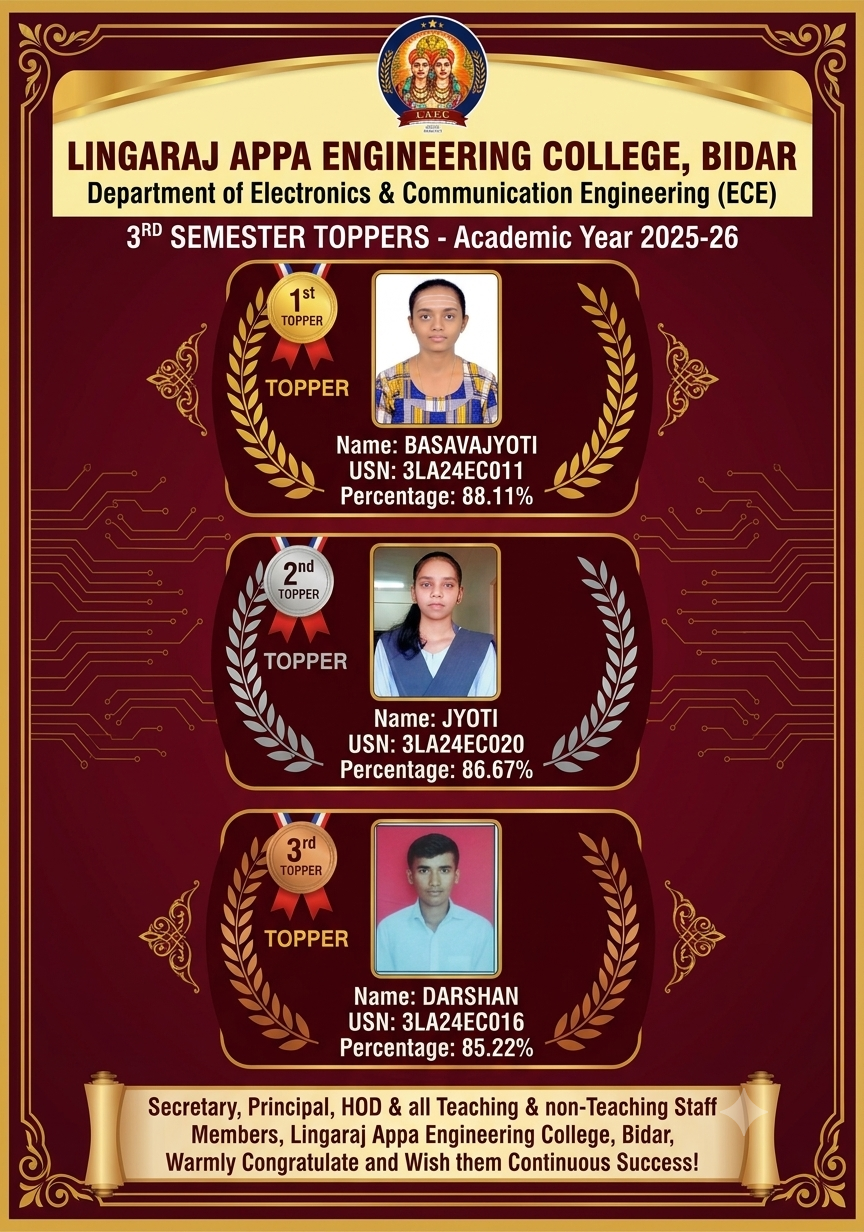
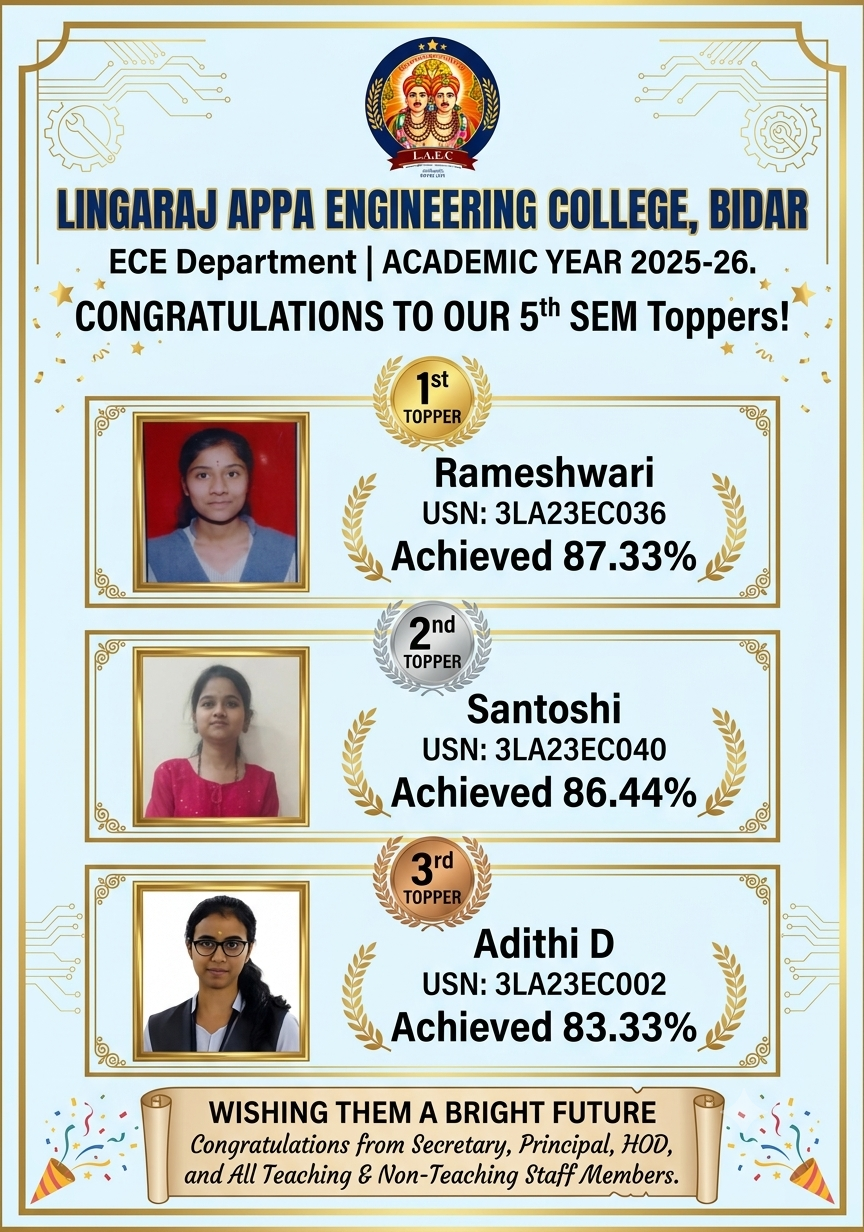
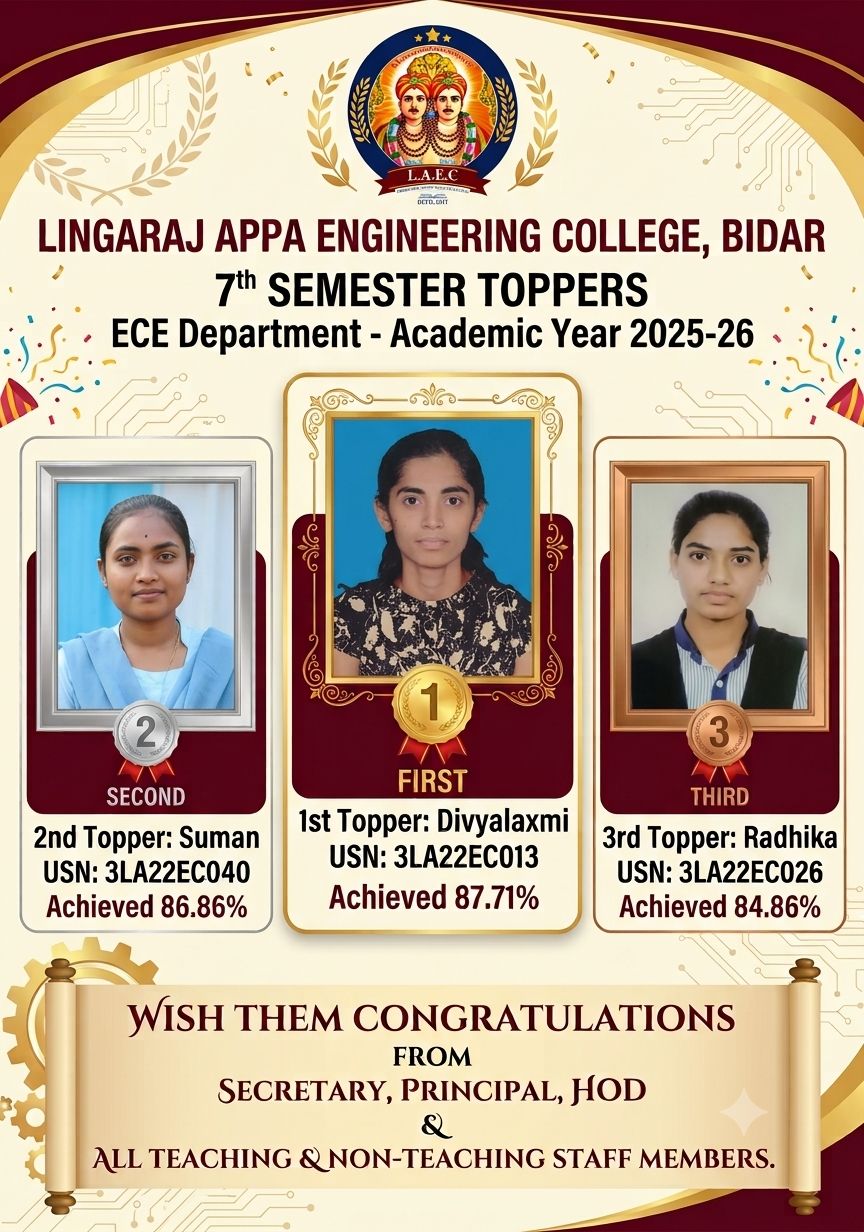
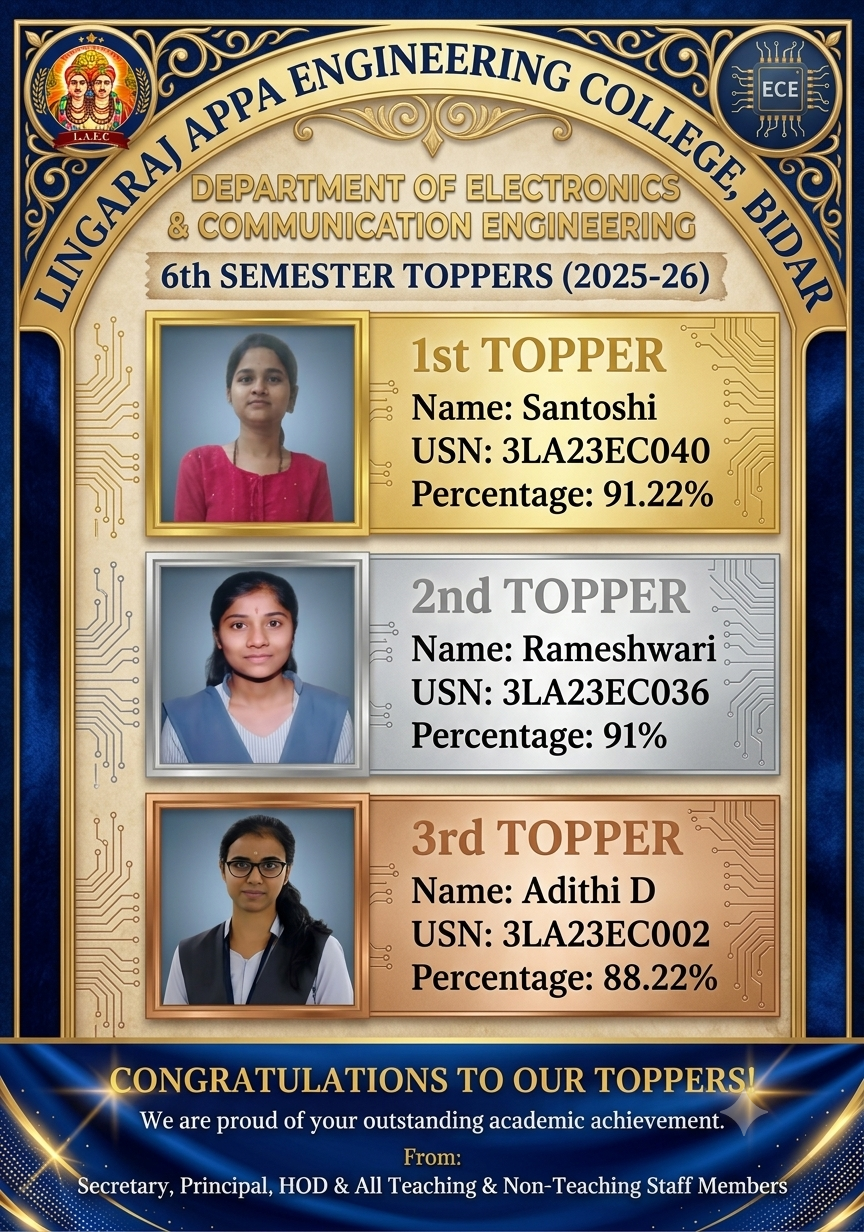
- ECE Topper's
- Result Analysis
- Prominent Alumni
- Students Information
| Department Overview |
The Department of Electronics and Communication Engineering was established in the Institution during 2011. It is one of the Prestigious and Core department in the Institution, offering a UG program with an intake of 60 students and PG program in VLSI Design and Embedded Systems with an intake of 16. It is also a recognized “Research Center” by VTU. The department is headed by Dr. Sharanbasappa Shetkar. The department is strengthened with 2 Professors, 2 Associate Professors, 10 Assistant Professors, and 3 Technical staff. The department has well-equipped laboratories with state-of-art infrastructure, a department library, and internet facilities. The Department endows with additional industrial training, live projects & hands-on to enhance employability.
Dept. Email Id: laec.ece@gmail.com
| HOD Desk |
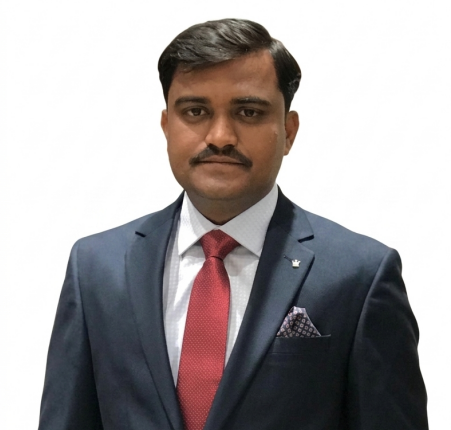
| Dr. Sharanbasappa Shetkar |
| Professor & H.O.D. |
| Department of Electronics & Communication Engineering |
| Lingaraj Appa Engineering College, Bidar |
Dr. Sharanbasappa Shetkar is an accomplished academician and leader with over 13+ years of experience in the academic profession. He currently serves as the Head of the Electronics & Communication Engineering department at Lingaraj Appa Engineering College in Bidar, Karnataka, India.
Academic Background
He earned his Ph.D. in Electronics from Visvesvaraya Technological University (VTU), Belagavi, with a thesis titled “Enhancing the Efficiency of Optical Filtering for Visible Light Communications”. He also holds a Master of Technology in Digital Electronics & Communication from VTU Belgaum and a Bachelor of Engineering in the same field from Rural Engineering College Bhalki.
Areas of Expertise
Dr. Shetkar's expertise spans a range of subjects critical to electronics and communication engineering, including Field Theory, Signals & Systems, Control Systems, Low Power VLSI Designing, Basic Electronics, Computer Organization, and Operating Systems. He has experience handling various laboratories, such as the Analog Electronics Lab, Logic Design Lab, HDL Lab, and Power Electronics Lab.
| Department Vision |
The ECE department aims to lead the way in research and higher education while developing innovative solutions to societal problems.
| Department Mission |
| M1: A Centre of excellence for technology, training, teaching and research with the goal of producing elite electronics and communication engineers to benefit society and the country. |
| M2: To instill a spirit of entrepreneurship, professional ethics and values that meets the needs of society and industry. |
| M3: To build a technical workforce by regularly planning workshops, expert talks and Industrial Visits. |
| M4: To facilitate students with opportunities to hone their ethics & leadership potential for their better futures. |
| Program Educational Objectives (PEO's) |
The graduates of electronics and communication engineering will: PEO I: Impart foundational knowledge in electronics and communication engineering curriculum that will help them in their future professional endeavors and academic pursuits. PEO II: Train the students to develop new products and solve engineering challenges that is technically sound and socially acceptable. PEO III: Encourage multidisciplinary work environment; utilizing their expertise abilities and resources to design, create and develop technologies with inventive and creative solutions to engineering challenges. PEO IV: Graduates are encouraged for learning by acquiring new theories and technical advancements in their domain. PEO V:Training the graduates to lead, communicate with values of teams and exhibit good moral behavior.
PSO I: Apply differential integral calculus in mathematics, science and engineering principles specific to electronics and communication engineering.
PSO II: Apply the knowledge of electronics and communication engineering principles in VLSI. Signal Processing, Communication, Embedded Systems, Control Engineering, Software and Hardware Programming.
PSO III: Conduct experiments, analyse and interpret data, use modern tools in the field of electronics and communication engineering. Demonstrate the leadership qualities and strive for the betterment of organization, environment and society.
| Faculty List |
| Name | Designation | Qualification | Experience |
| Dr. Vinita Patil | Professor & Principal | B.E., M. Tech., Ph.D., PDF. | 14 |
| Dr. Sharanbasappa Shetkar | Professor & H.O. D | B.E., M. Tech., Ph.D. | 14.2 |
| Dr. Basavalinga Swamy | Associate Professor | B.E., M. Tech., Ph.D. | 13.8 |
| Dr. Sagarkumar Buyya | Associate Professor | B.E., M. Tech., Ph.D. | 14.2 |
| Prof. Sadhana C | Assistant Professor | B.E., M. Tech. | 13.2 |
| Prof. Chaya Bhavi | Assistant Professor | B.E., M. Tech., (Ph.D.) | 4.7 |
| Prof. Lata J | Assistant Professor | B.E., M. Tech. | 3.7 |
| Prof. Bashetty Pallavi | Assistant Professor | B.E., M. Tech. | 1.9 |
| Prof. Vijaylaxmi wade | Assistant Professor | B.E., M. Tech. | 1 |
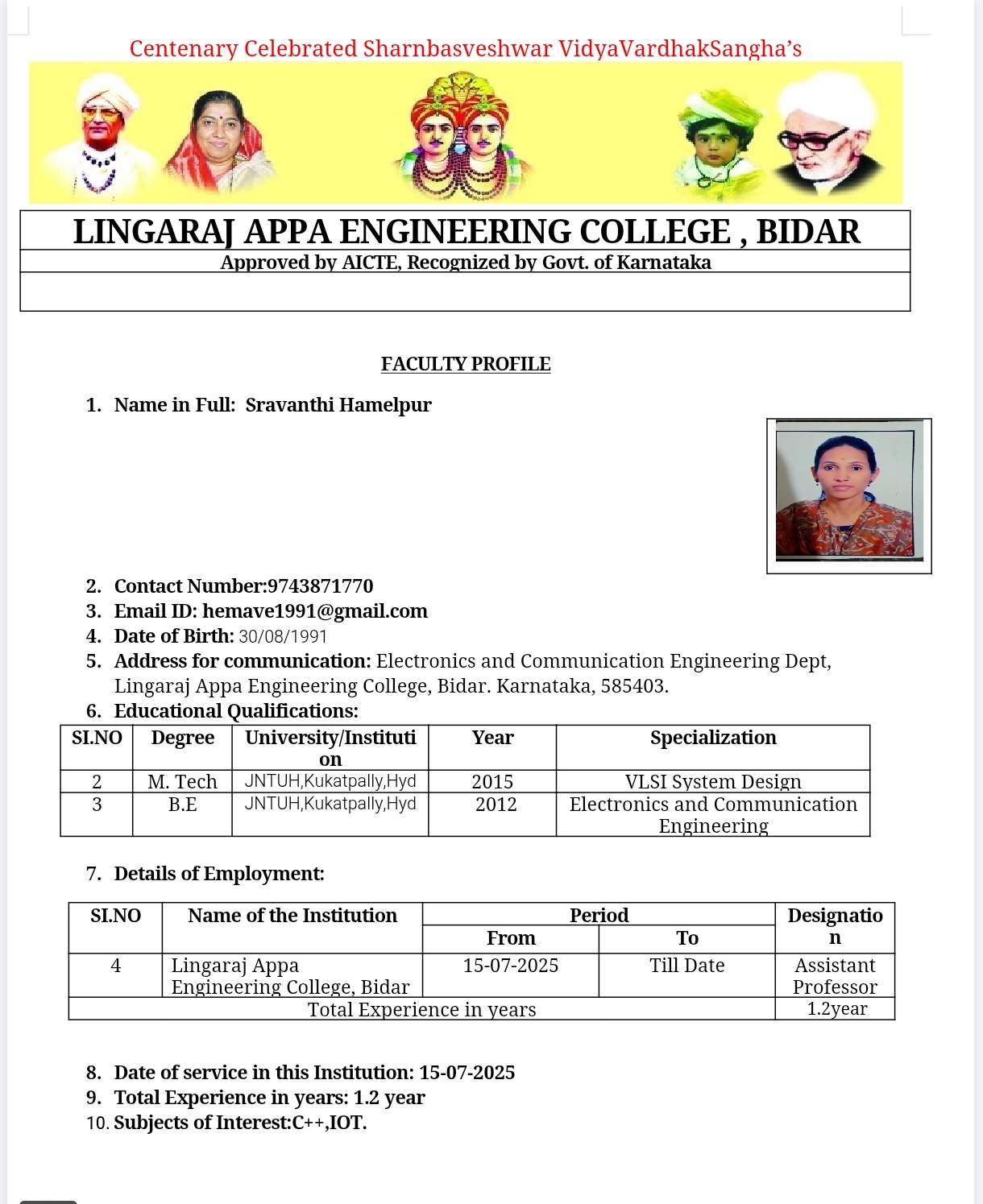
| Prof. Shravanthi | Assistant Professor | B.E., M. Tech. | 1 |
| Prof. Rakesh T | Assistant Professor | B.E., M. Tech. | 1 |
| Prof. Akshata Biradar | Assistant Professor | B.E., M. Tech. | 0.8 |
| Prof. Pooja Sainure | Assistant Professor | B.E., M. Tech. | Fresher |
| Prof. Renuka Math | Assistant Professor | B.Tech., M. Tech. | Fresher |
| Sl. No. | Major Equipment's | Lab Photo |
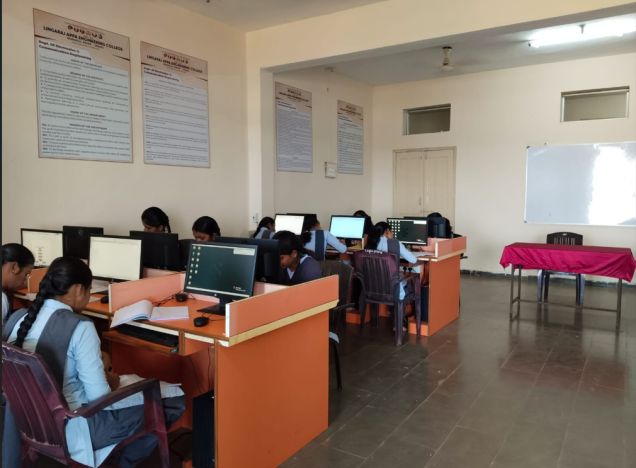
| Lab 1 | Desktops with C++ Compilers, Scilab 6.1.1 Software, NI Multisim (14.0) Software, NS2 Software, Arduino IDE Software & Raspberry Pi, Node MCU board, Wi-Fi & Bluetooth modules, Sensors (temperature, humidity, IR, gas), Actuators, IoT Cloud Platforms. | Lab Instructor: Rajeshwari Patil
 |
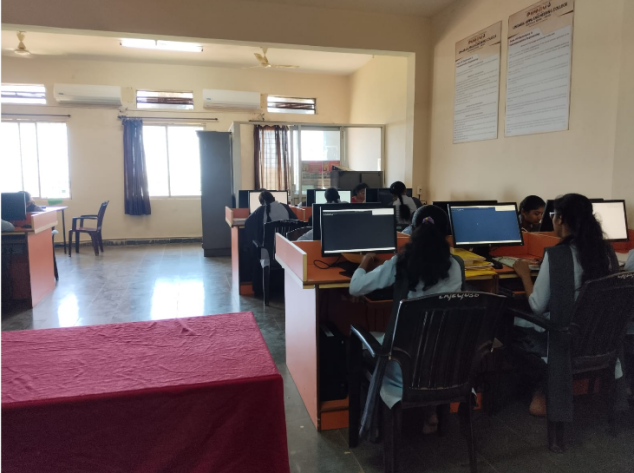
| Lab 2 | Desktops with C++ Compilers, Cadence Virtuoso@ (10 users), Xilinx ISE 8.1i Software, Sci lab (6.1.1), FPGA, CRO Communication Trainer Kit using Spartan-6, Keil uVision4 Software, Arm Cortex M3 (LPC1768) Kits, CRO. | Lab Instructor: Rajeshwari Patil
 |
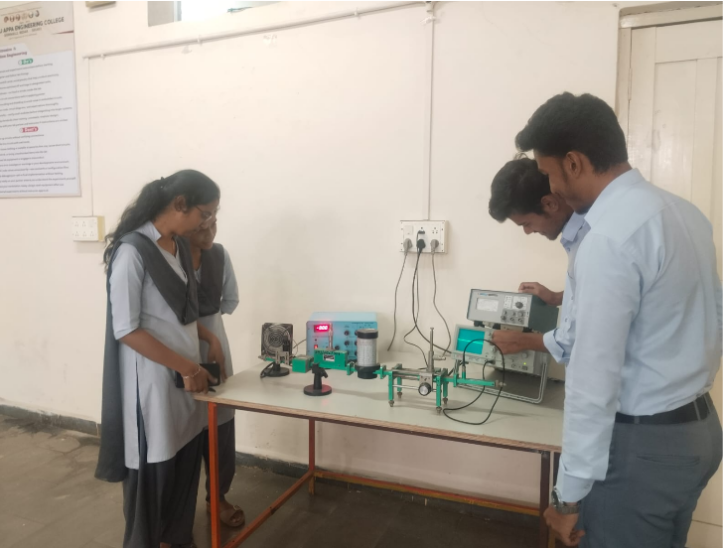
| Lab 3 | Klystron Power Supply, VSWR Meter, RF Meters, Isolator, Klyston Tube, CRO, Power Supply | Lab Instructor:Abdul Ubaid
 |
| Lab 4 | CRO, Function Generator, Power Supply | ||
| CRO, Function Generator, Power Supply | |||
| CRO, Function Generator, Power Supply | |||
| Lab 5 | Desktops, Language Guru Software | ||
| Lab 6 | Desktops, Drones, IIOT Panel, mBlock |
| Research and Development |
- Research Scholars under Dr. Vinita Patil
- Dr. Vinita Patil Research_Supervisor_Recognition_Letter
- Research Scholars under Dr. Sharanbasappa Shetkar
- Dr. Sharanbasappa Shetkar_VTU_Research_Supervisor_Recognition_Letter
- Research Scholars under Dr. Basavalinga Swamy
- Dr, Basavalinga Swamy_VTU_Research_Supervisor_Recognition_Letter
Faculty Development Programs
| Sl. No. | FDP Title | Duration No. of Days | Start date and end date | Organizing Institution |
| 1 | Artificial Intelligence & Machine Learning | 05 | 26-12-2025 to 30-12-2025 | Department of ECE, LAEC, Bidar |
| 2 | STEM Robotics | 10 | 01-04-2025 to 10-04-2025 | Department of ECE, LAEC, Bidar |
| 3 | Microsoft Power Bi Data Analyst Associate | 05 | 10-06-2024 to 14-06-2024 | Department of ECE, LAEC, Bidar |
| 4 | Embedded IoT Application Design and Development. | 03 | 20-05-2024 to 22-05-2024 | Department of ECE, LAEC, Bidar |
| 5 | Inculcating Universal Human Values in Technical Education | 03 | 06-11-2023 to 08-11-2024 | Department of ECE, LAEC, Bidar |
| 6 | LLMs to Agentic AI Systems Comprehesive Curriculum | 05 | 12-12-2022 to 17-12-2022 | Department of ECE, LAEC, Bidar |
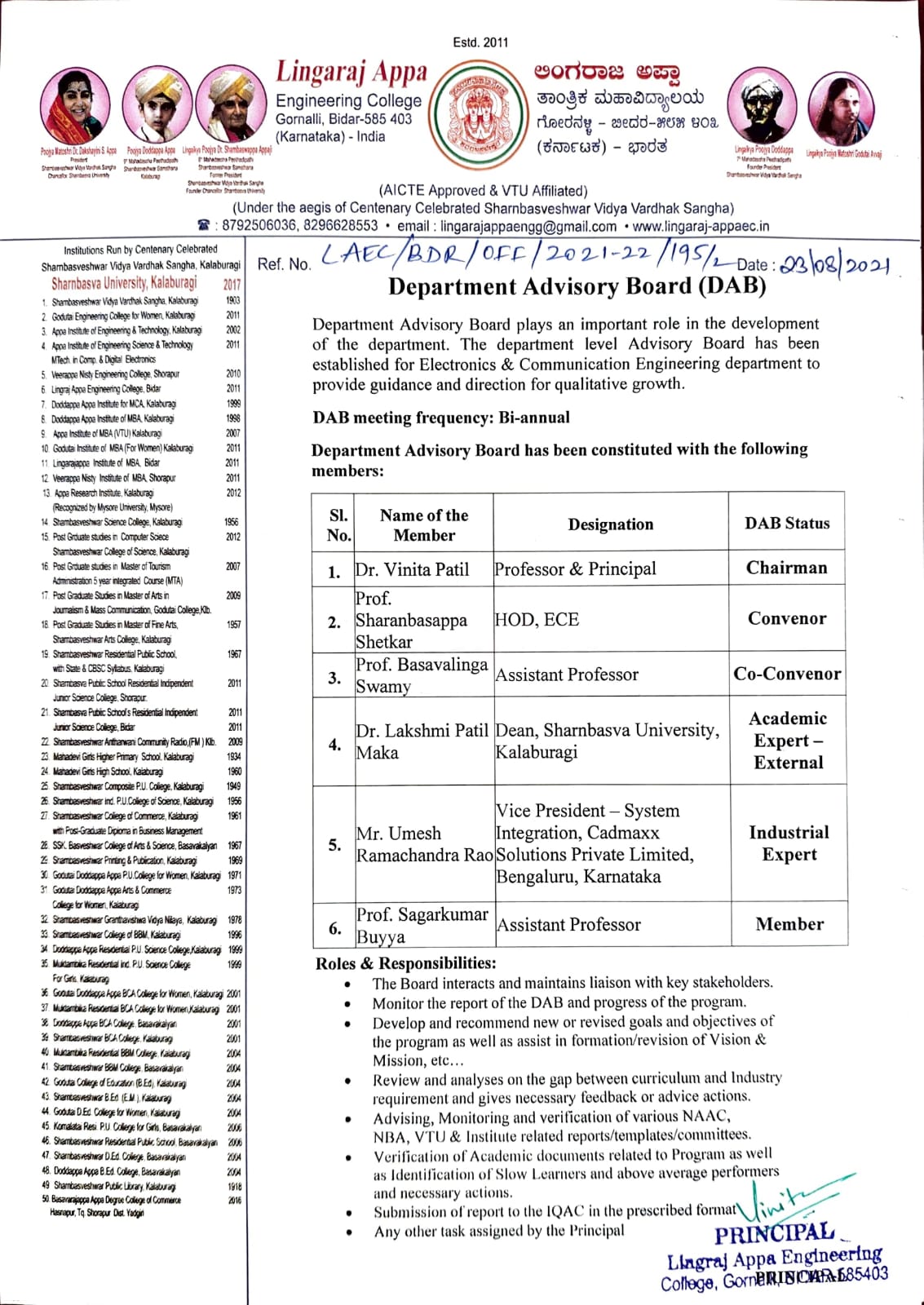
Department Advisory Board
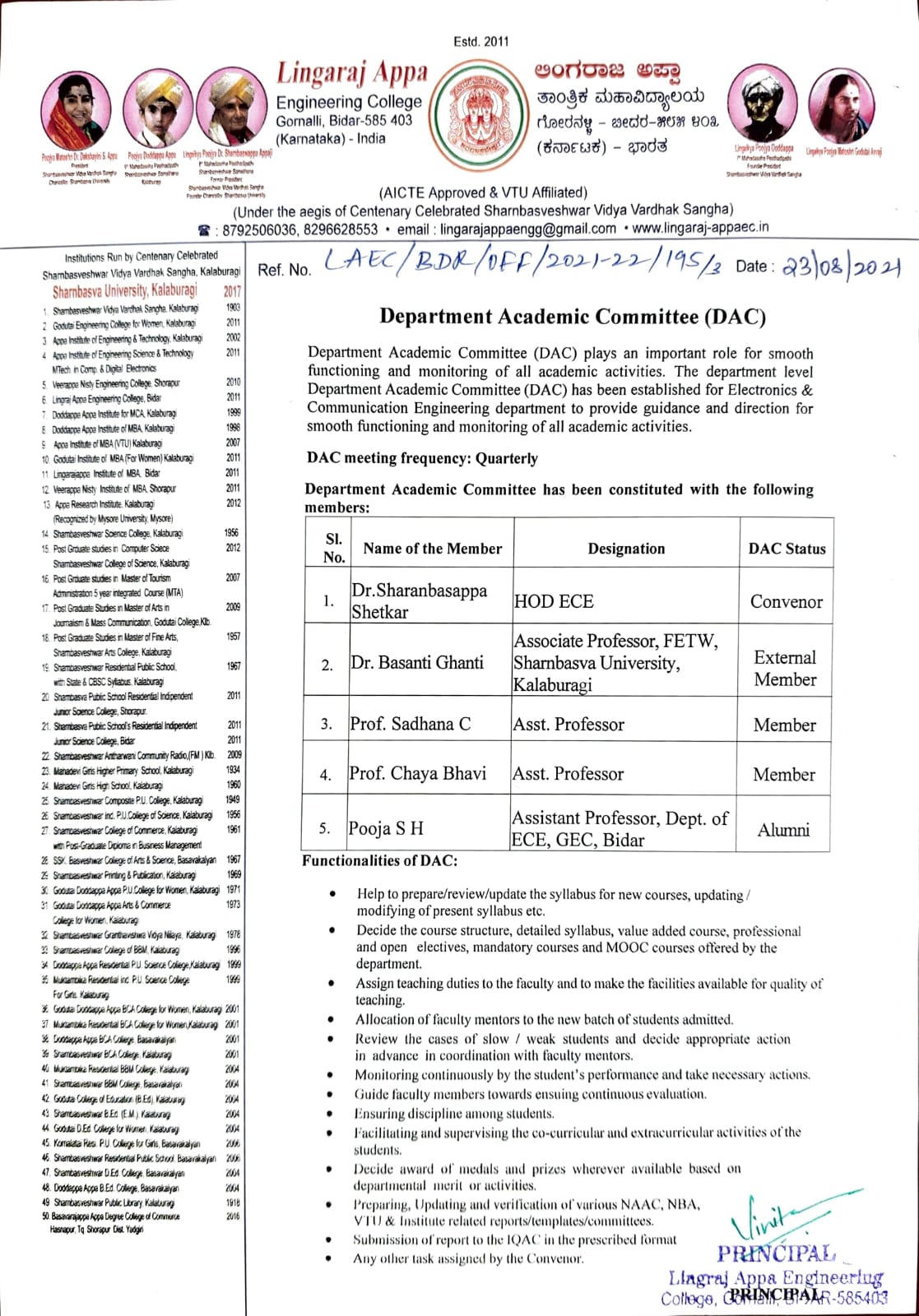
Department Academic Committee
Innovative Teaching Methods.
- Lectures: Classroom lectures effectively deliver theoretical knowledge through logical explanations and numerical problem-solving. Faculty members use interactive teaching techniques to encourage student participation and improve learning outcomes.
- Tutorials: Tutorial sessions provide students with an opportunity to dive deeper into numerical and logical problem-solving courses.
- Presentations Using Audio-Visual Aids: Presentations are used to illustrate complex engineering concepts visually using graphics, animations, and real-world data. Videos showcasing practical engineering applications help students to better understand the impact of technology. These sessions are followed by interactive discussions, where students can ask questions and exchange ideas.
- Laboratory-Based Learning: Students apply theoretical concepts in practical lab sessions, reinforcing their understanding through hands-on experience. Open ended experiments beyond syllabus allowing students to explore concepts creatively, develop critical thinking and engage in real-world problem-solving.
- Collaborative Learning: A group-based educational approach where students work together to solve problems, complete projects, and share ideas. Enhances teamwork, communication skills, and problem-solving abilities.
- Think and Speak: Students are assigned specific topics and asked to think critically and present their ideas in front of their peers. This method helps improve confidence, articulation, and public speaking skills.
- Flipped classroom: A flipped classroom is a teaching approach where students acquire foundational knowledge before class, often through videos or readings, and then use class time for active learning, such as problem-solving, group work, and discussions.
- YouTube videos: NPTEL videos are part of the National Programms on Technology Enhanced Learning, offering a vast repository of free, high-quality educational content.
- Poster presentation: Poster presentation is a visual display of projects and ideas which are presented in a public setting such as seminar and exhibition. It helps students to connect with others, improve the presentation skills and confidence, it provides a platform to share ideas with wider audience.
- Project Based Learning: It is an integral part of the curriculum, ensuring hands-on learning and practical exposure for students. Students actively engage in projects that help them apply theoretical knowledge to real-world challenges, fostering innovation, problem-solving skills, and technical expertise. Project based Learning ensure that, students are well-equipped with the technical competencies, creativity, and problem-solving skills required for a successful engineering career.
- Quiz: Teachers conduct quiz sessions to help students understand concepts as well as to have a first-hand assessment on students learning.
- Seminars: Students are engaged in Seminars and debates related to current syllabus topics and cutting-edge industrial technologies.
- Workshops: These are interactive, hands-on sessions where participants collaborate to solve problems, develop skills, or achieve specific goals under the guidance of a facilitator.
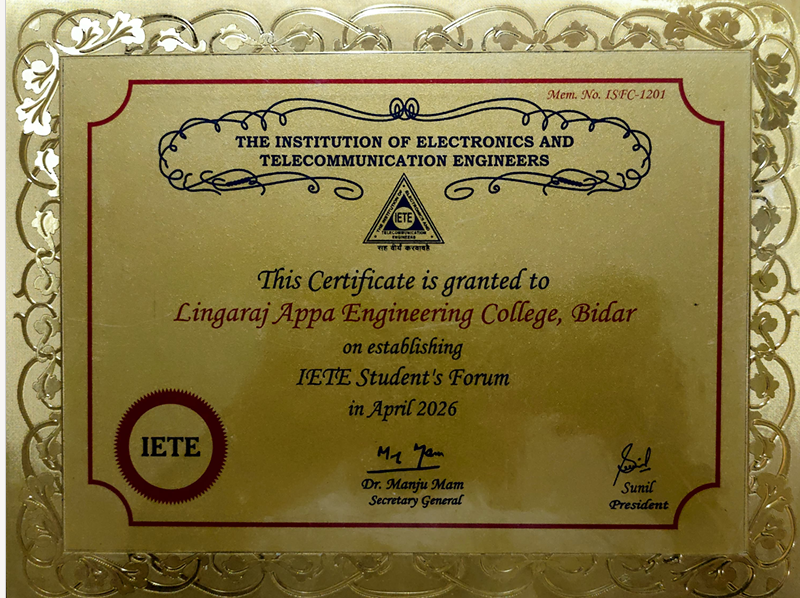
IETE Student's Forum
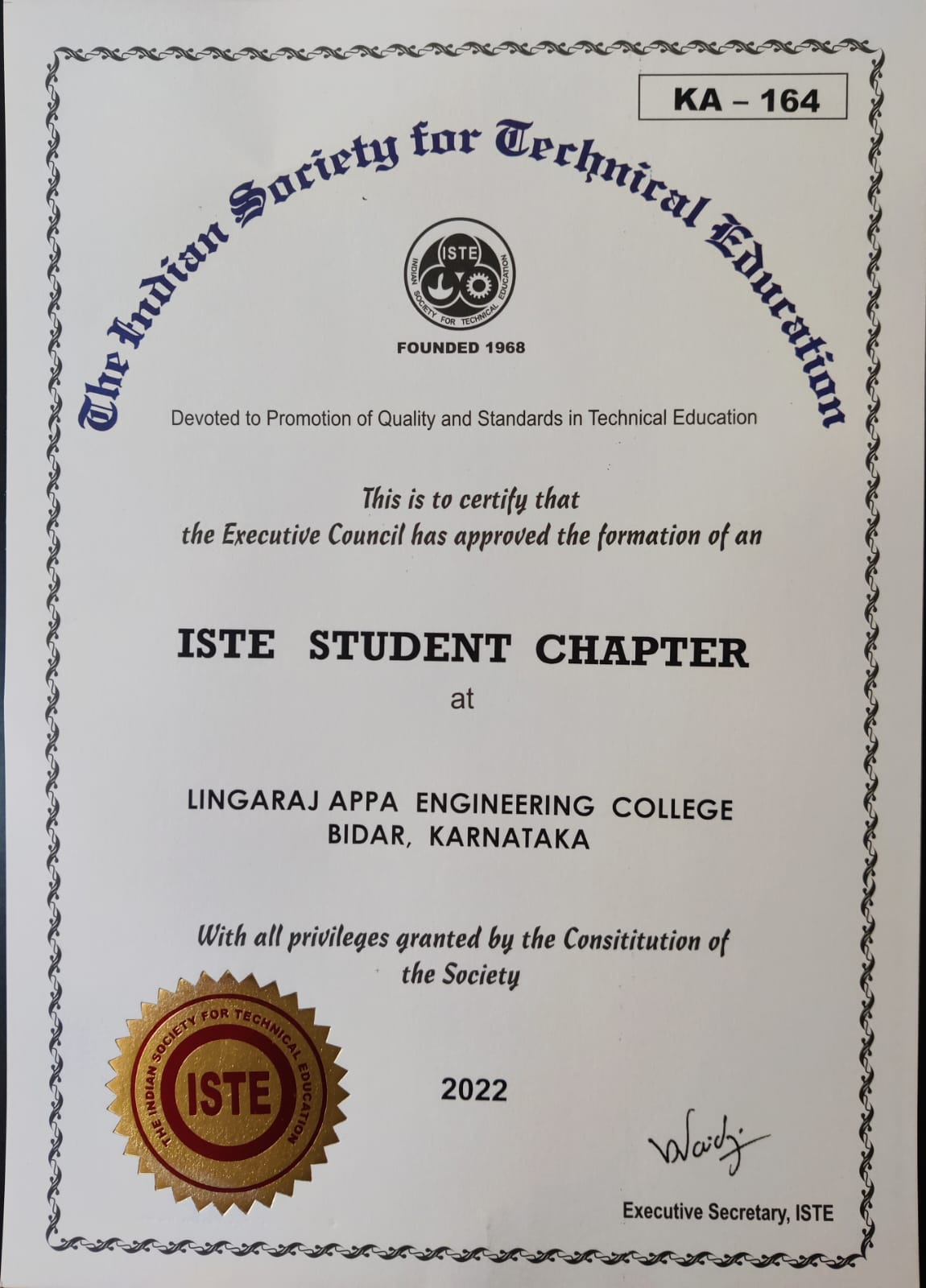
ISTE Student's Chapter
Best Projects
Best Project Selected under KSCST for AY: 2025-26

Best Project Selected under KSCST for AY: 2024-25

Best Project Selected under KSCST for AY: 2023-24

Placement & Higher Studies
| Year-wise Placement and Higher Studies Summary – (Based on Student Intake) E&CE | |||||||
| Pass-Out Year | Department | Total Students | In Take | PLACED STUDENTS | Higher Studies | Entrepreneurship | Placement Percentage |
| 2022-23 | ECE | 5 | 54 | 2 | 0 | 0 | 3.70 |
| 2023-24 | ECE | 8 | 54 | 7 | 1 | 0 | 14.81 |
| 2024-25 | ECE | 30 | 54 | 11 | 0 | 0 | 20.37 |
| Overall Total | ECE | 43 | 162 | 20 | 1 | 0 | 12.96 |
| 2025-26 | ECE | 42 | 54 | 10 | 0 | 0 | 18.52 |
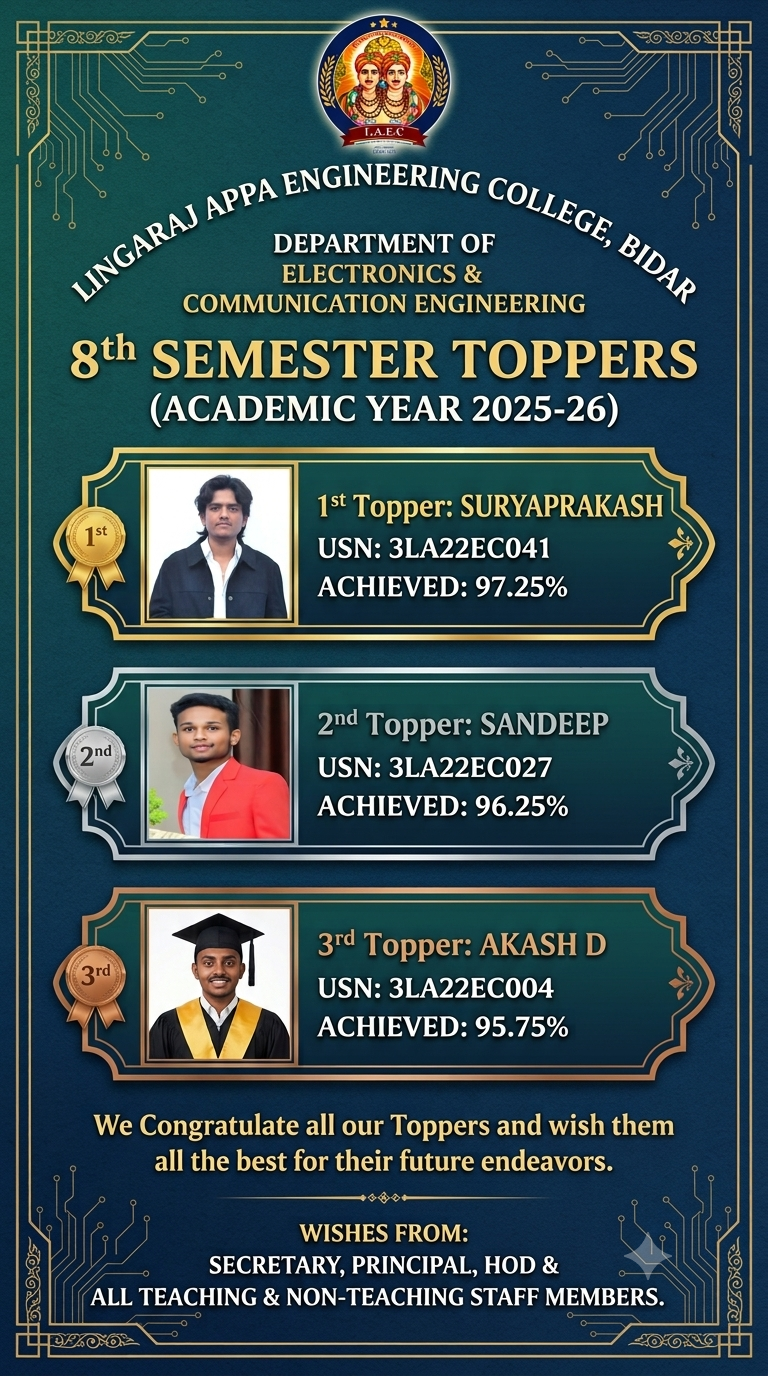
Academic Year 2025-26
Odd Semester Toppers
 |
 |
 |
Even Semester Toppers
 |
 |
 |
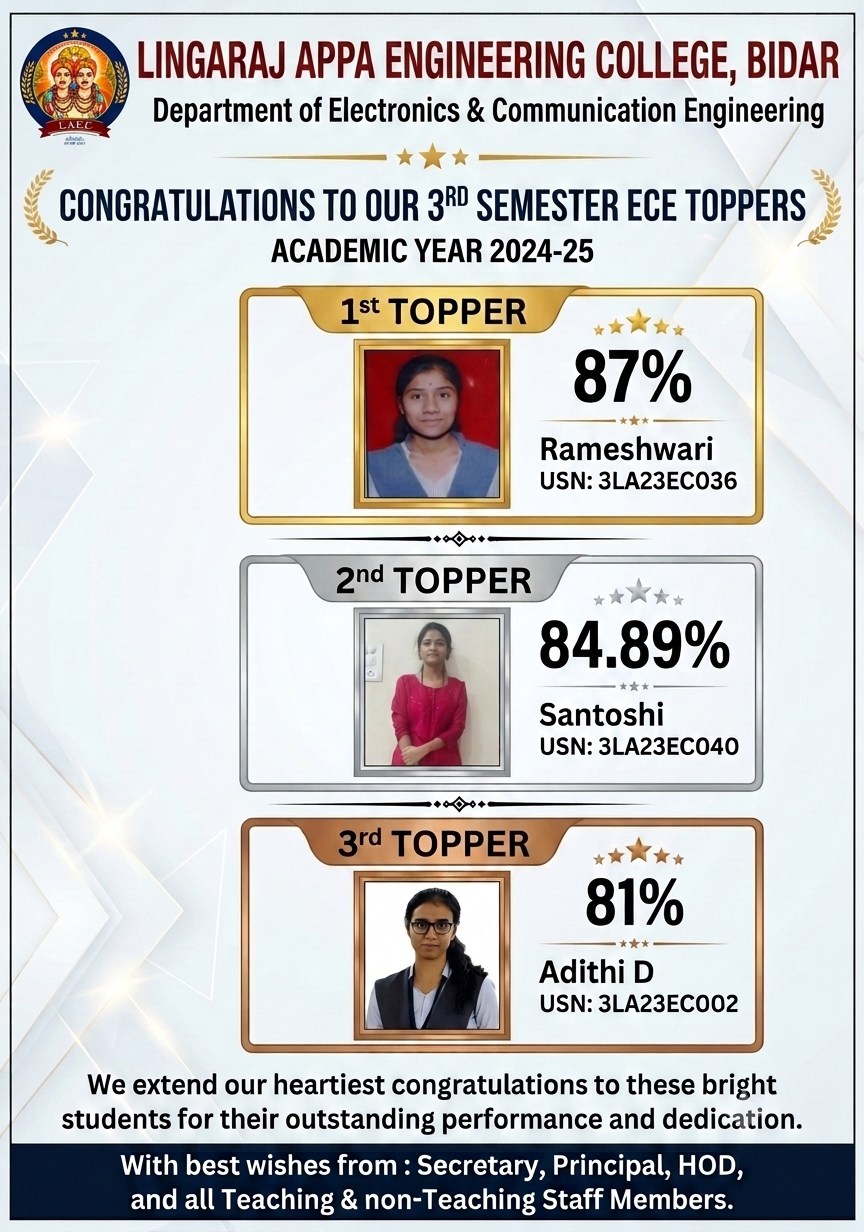
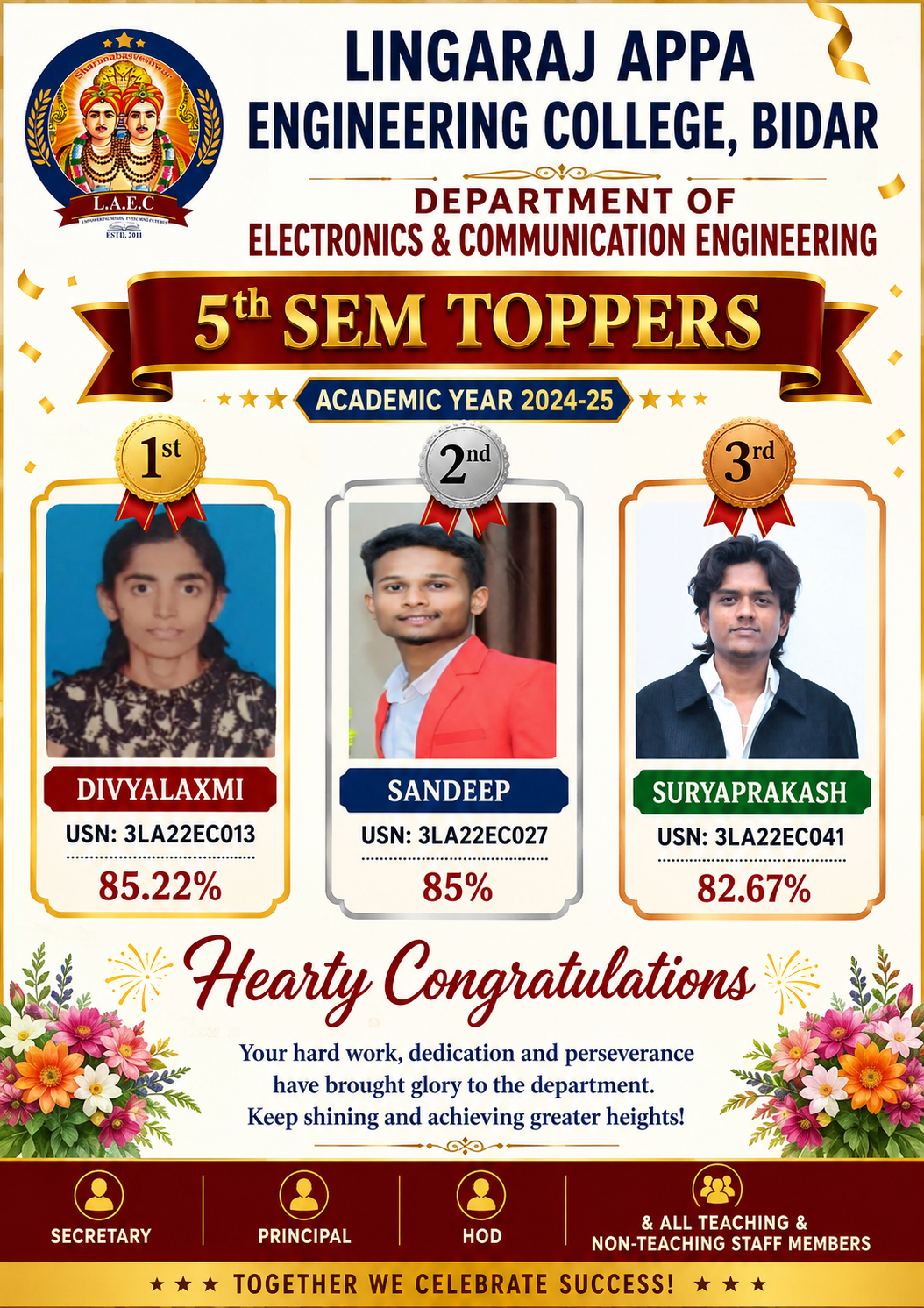
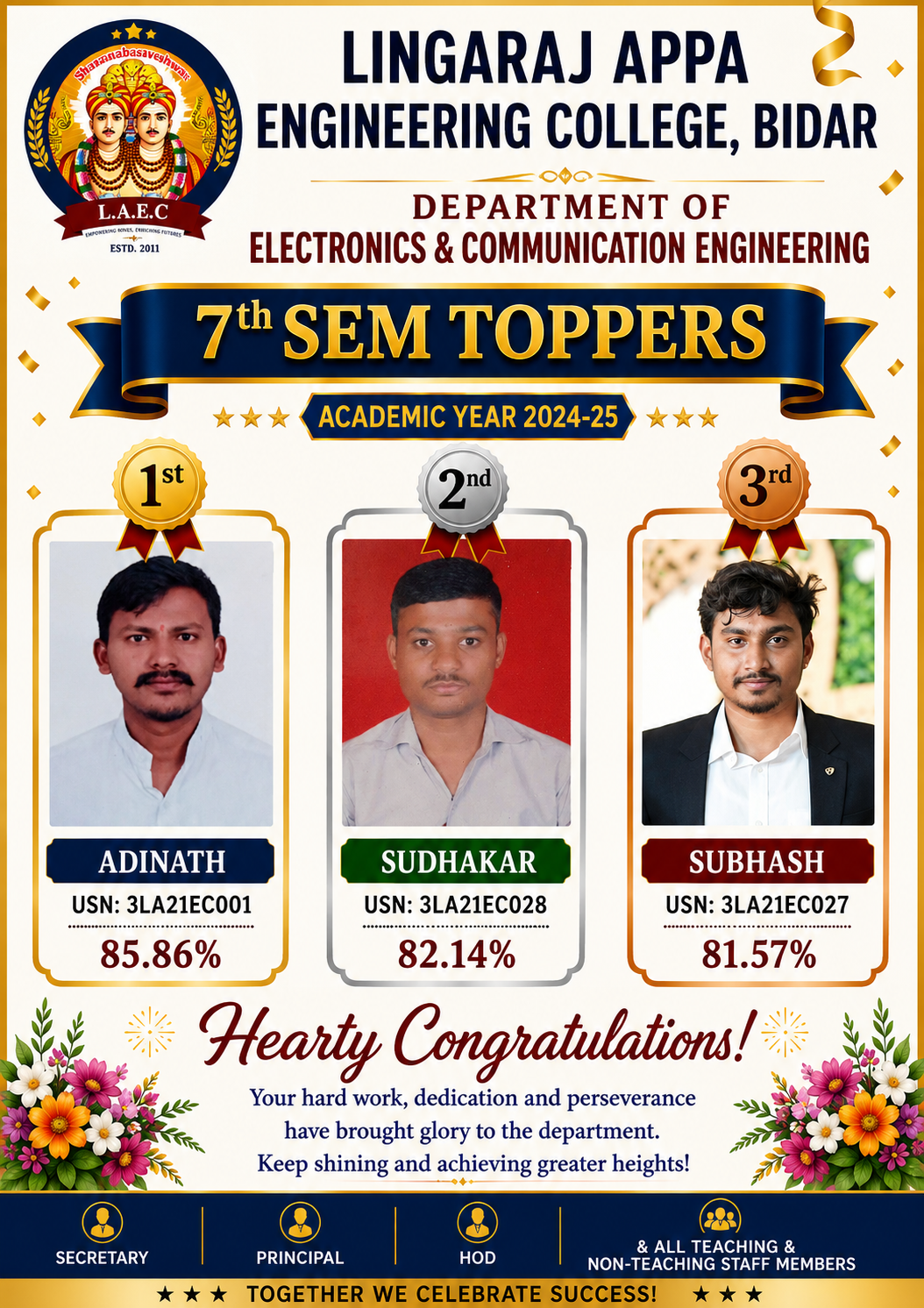
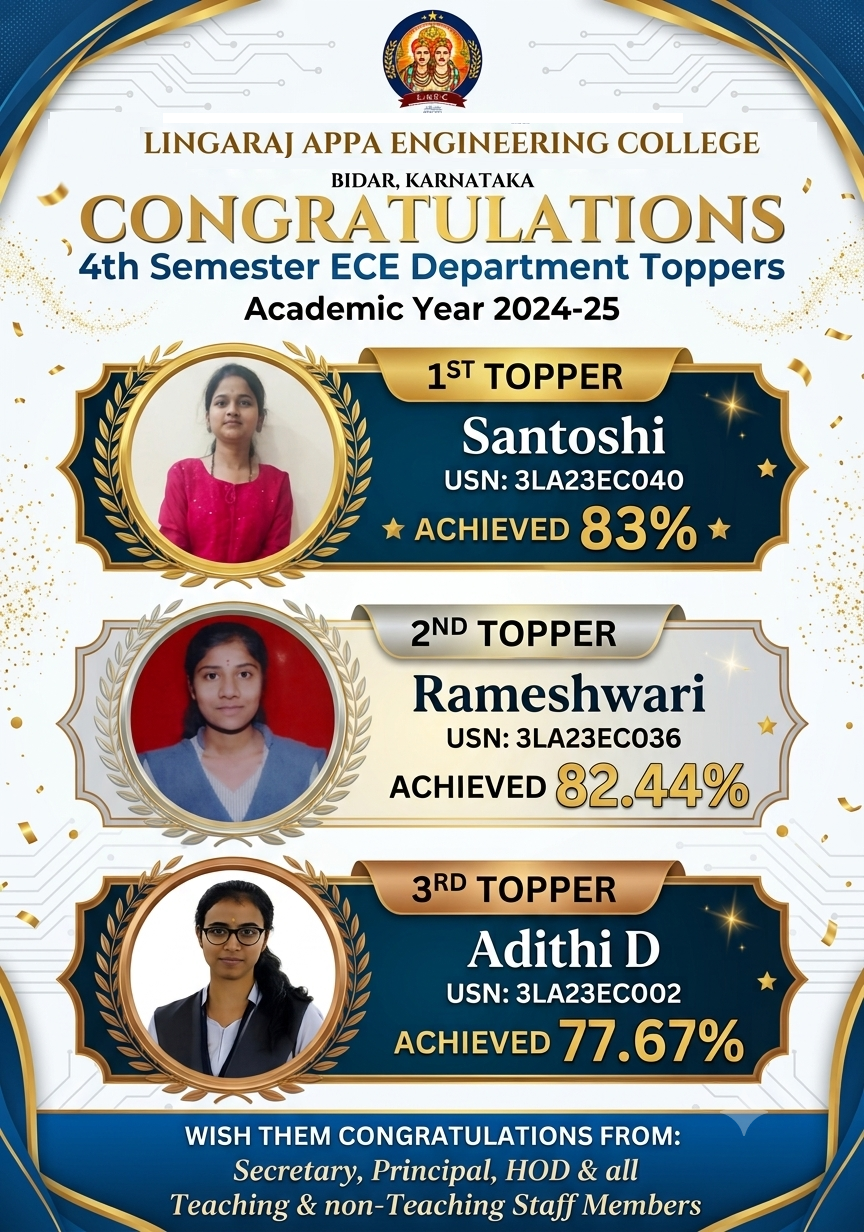
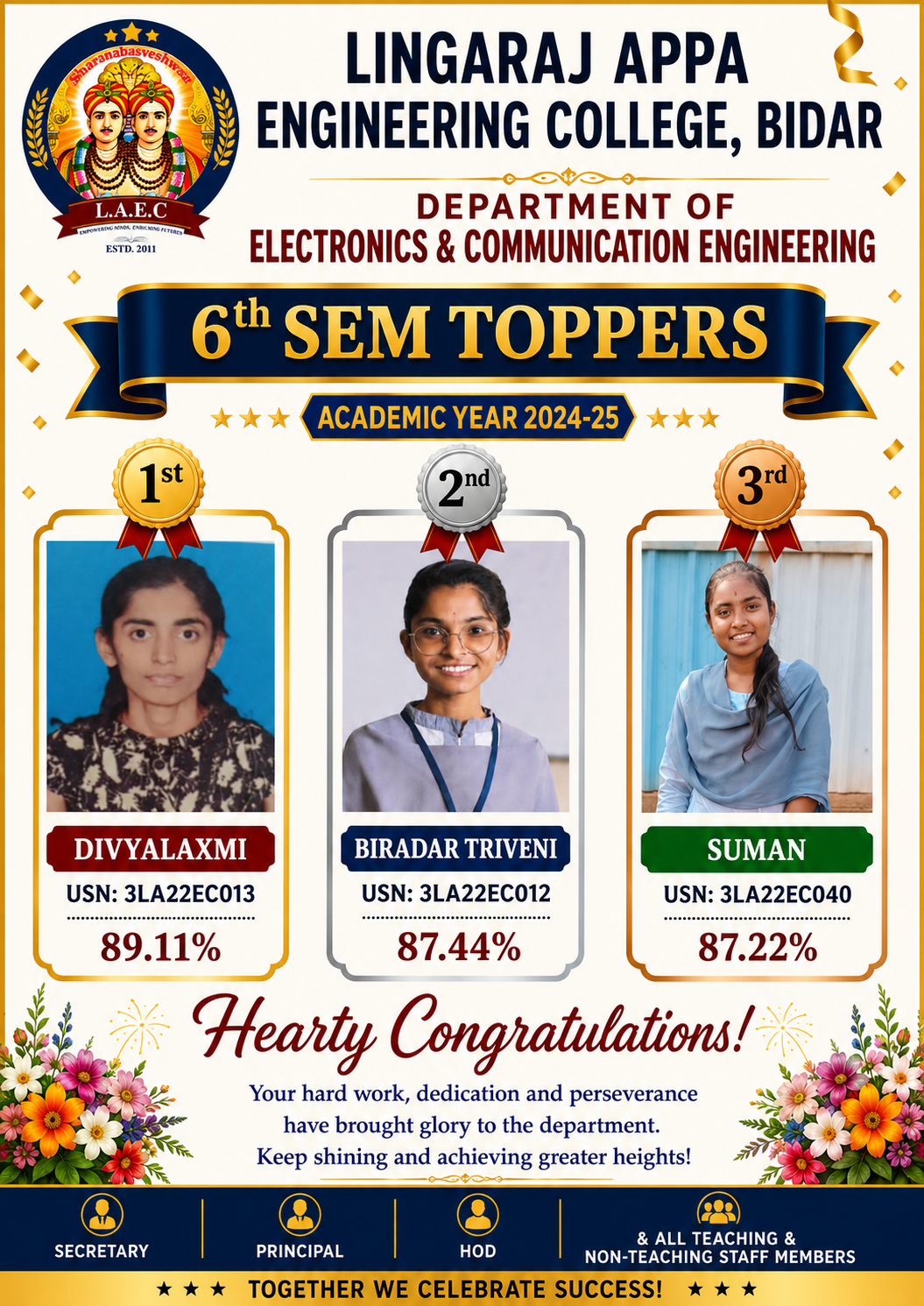
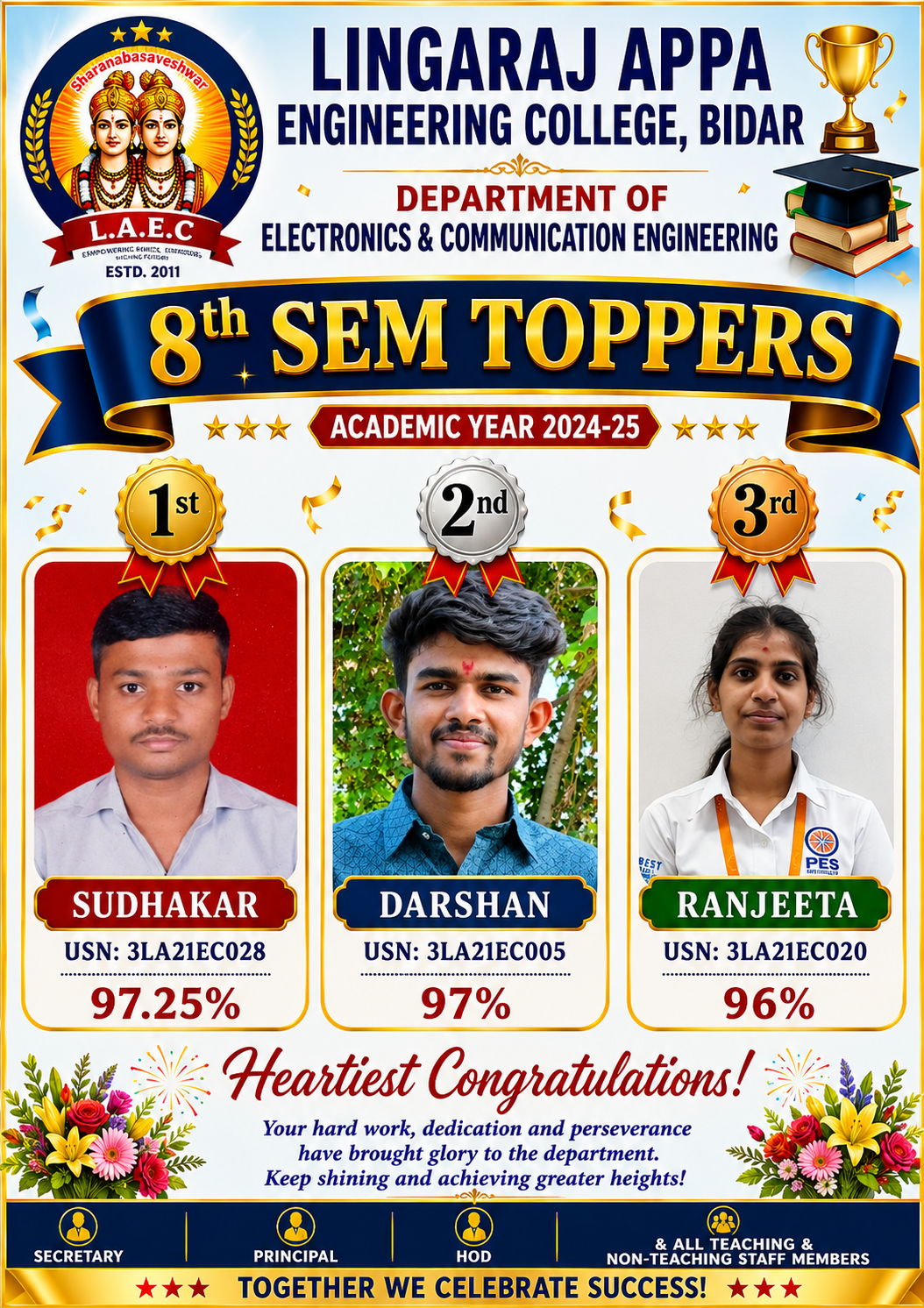
Academic Year 2024-25
Odd Semester Toppers
 |
 |
 |
Even Semester Toppers
 |
 |
 |
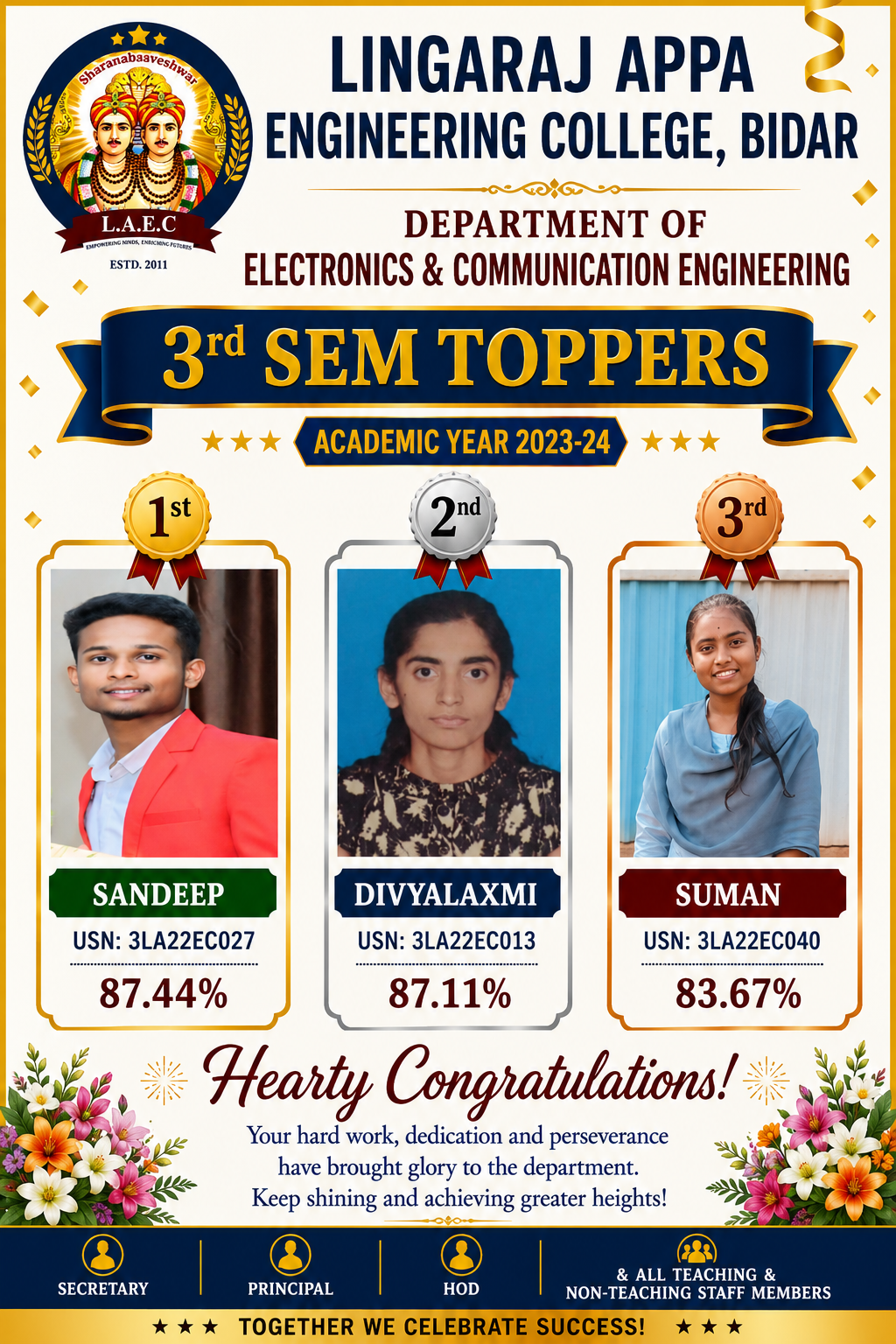
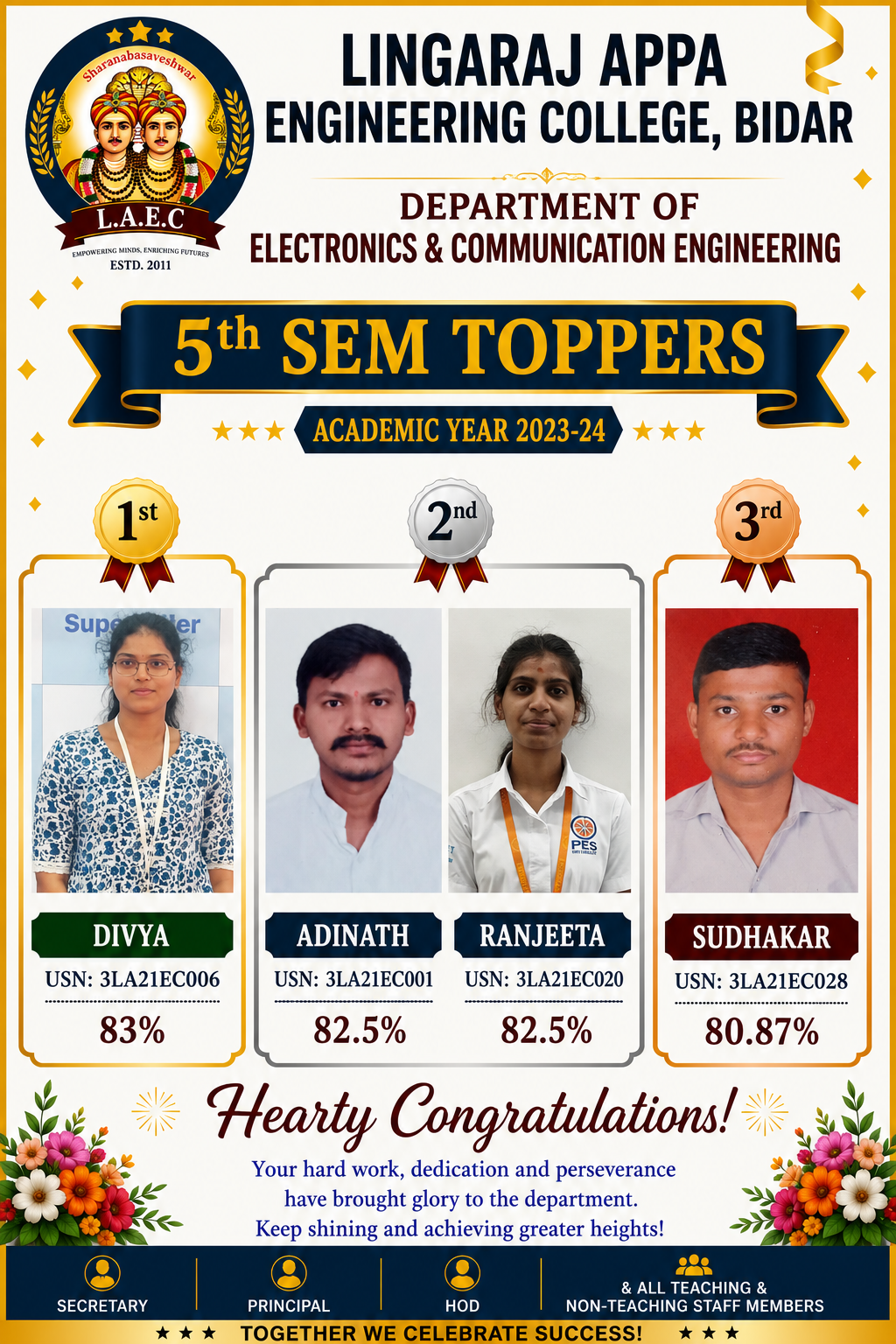
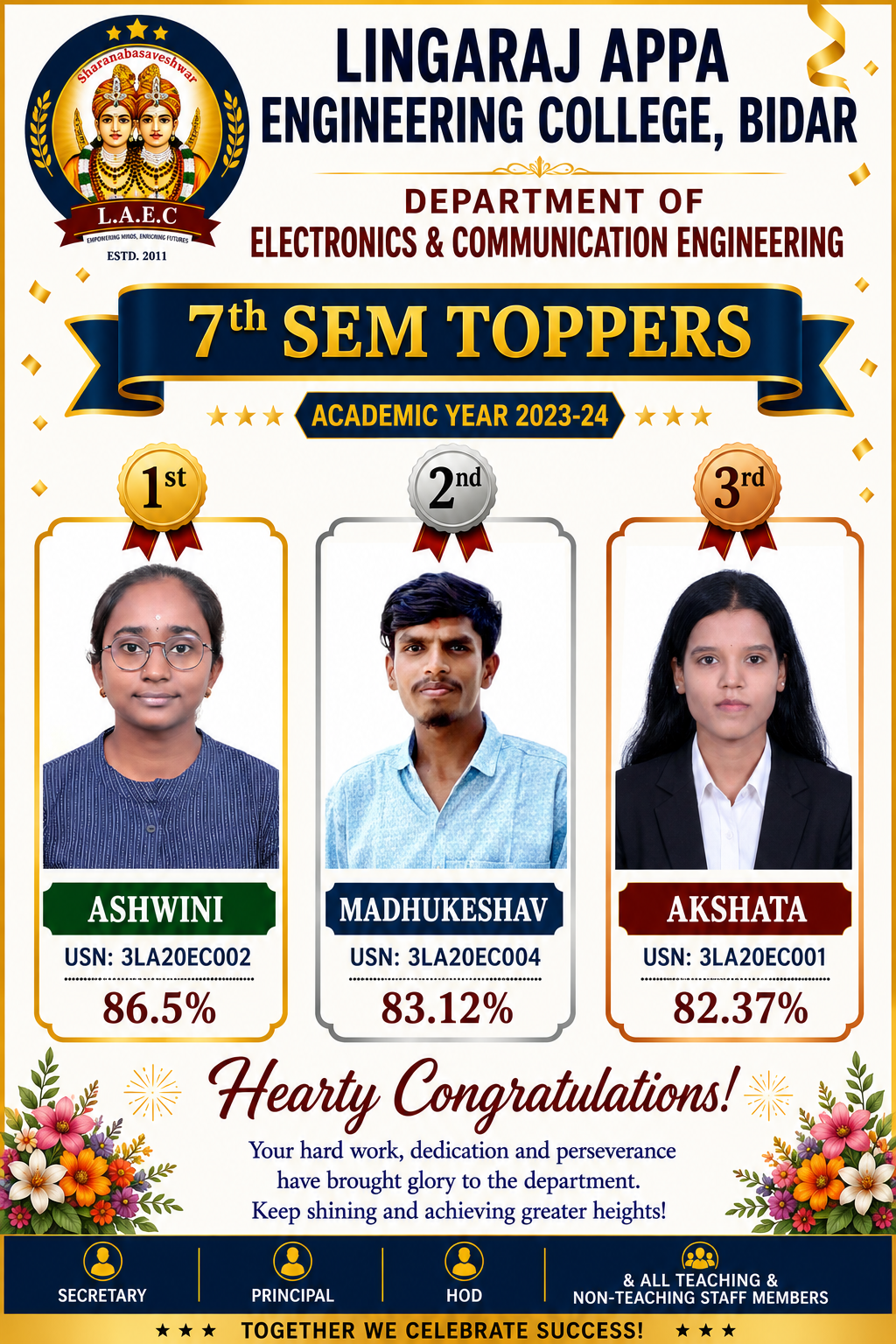
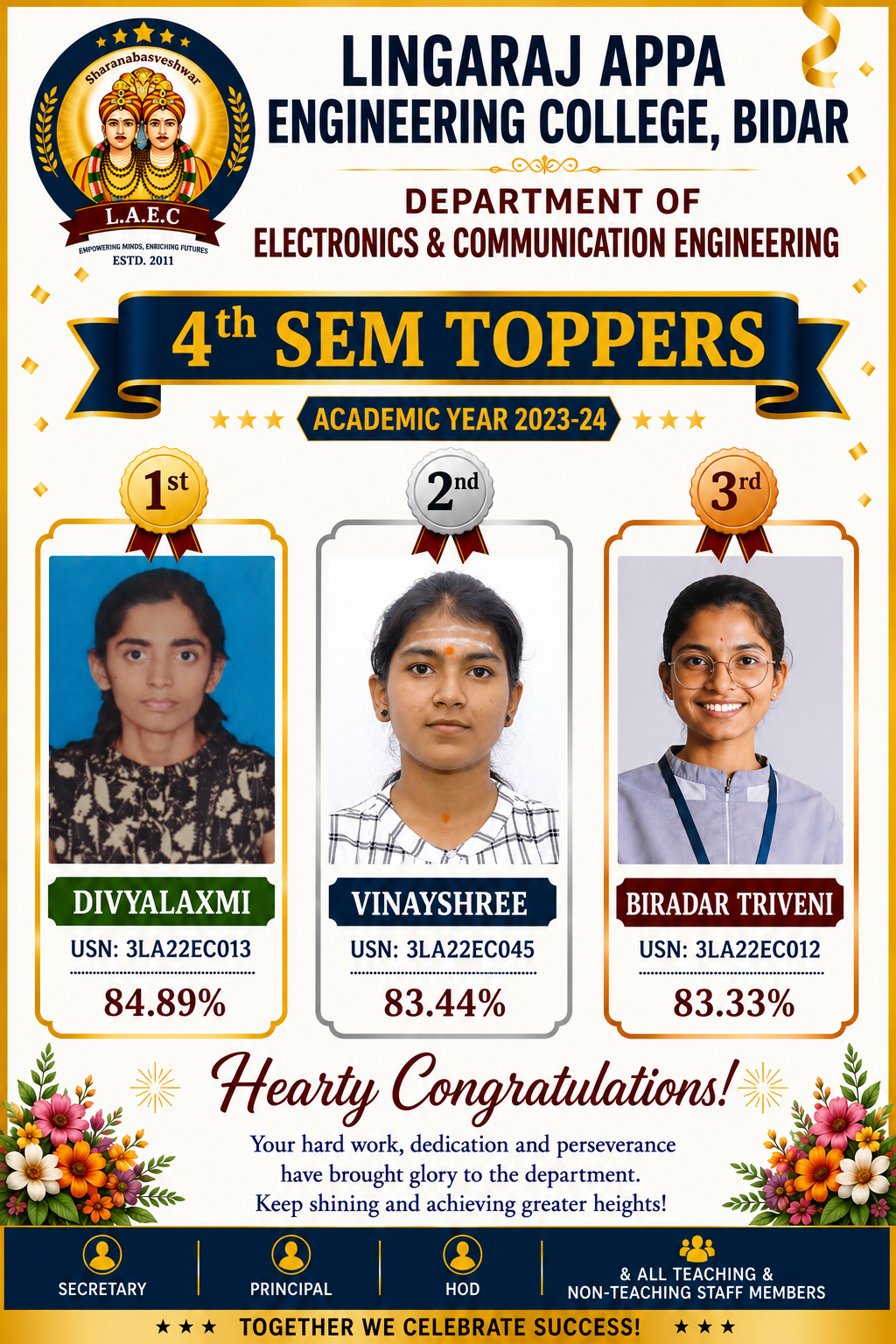
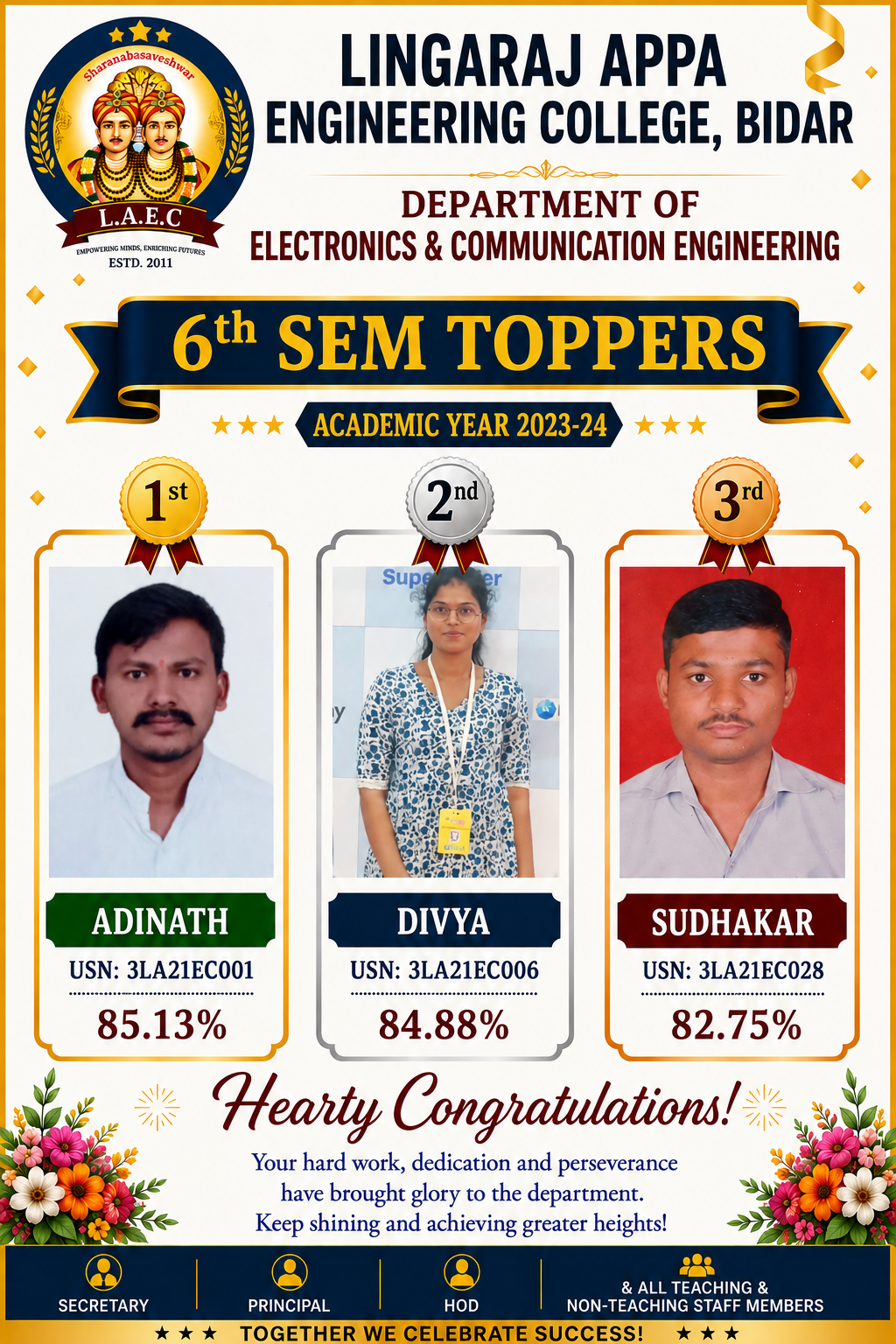
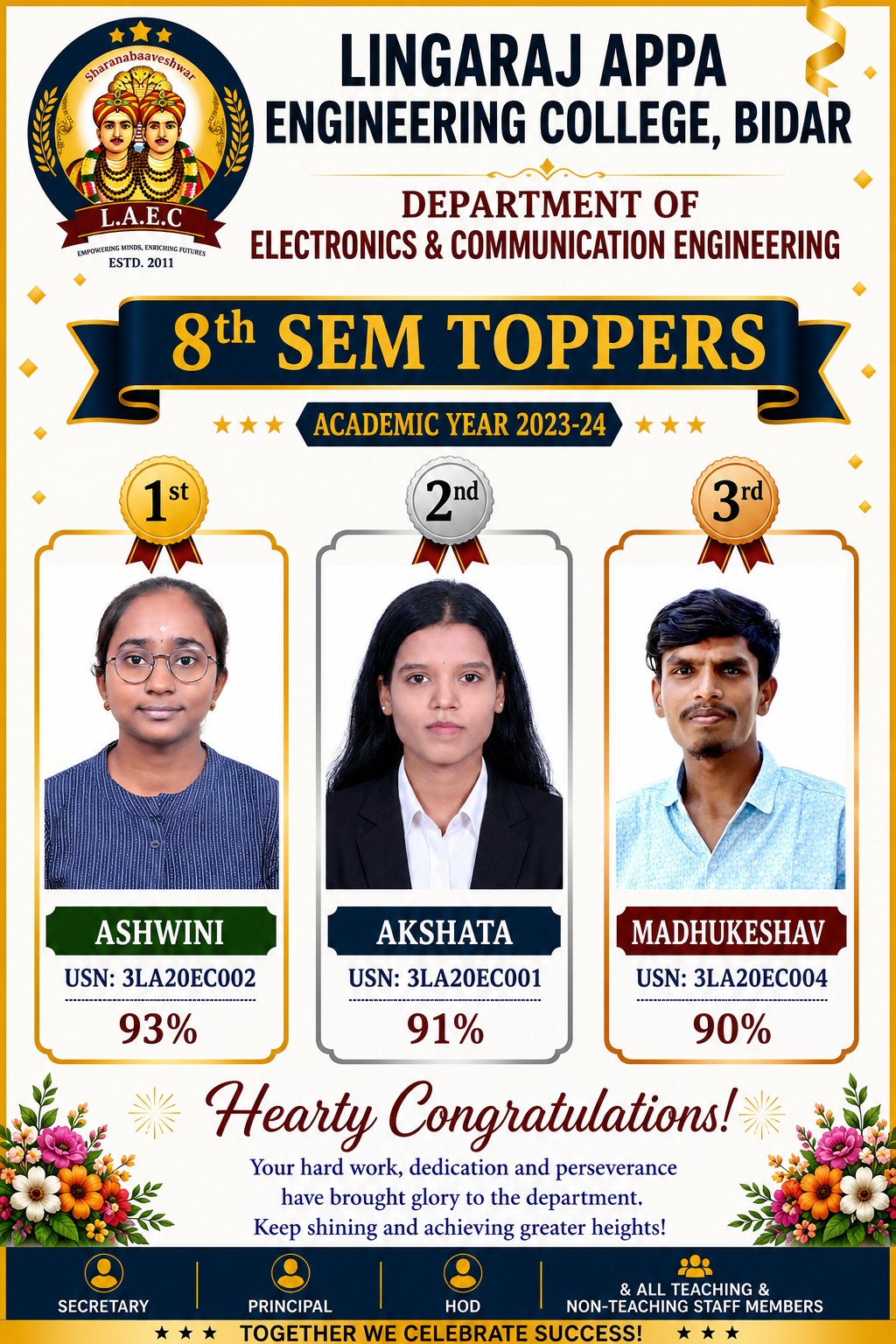
Academic Year 2023-24
Odd Semester Toppers
 |
 |
 |
Even Semester Toppers
 |
 |
 |
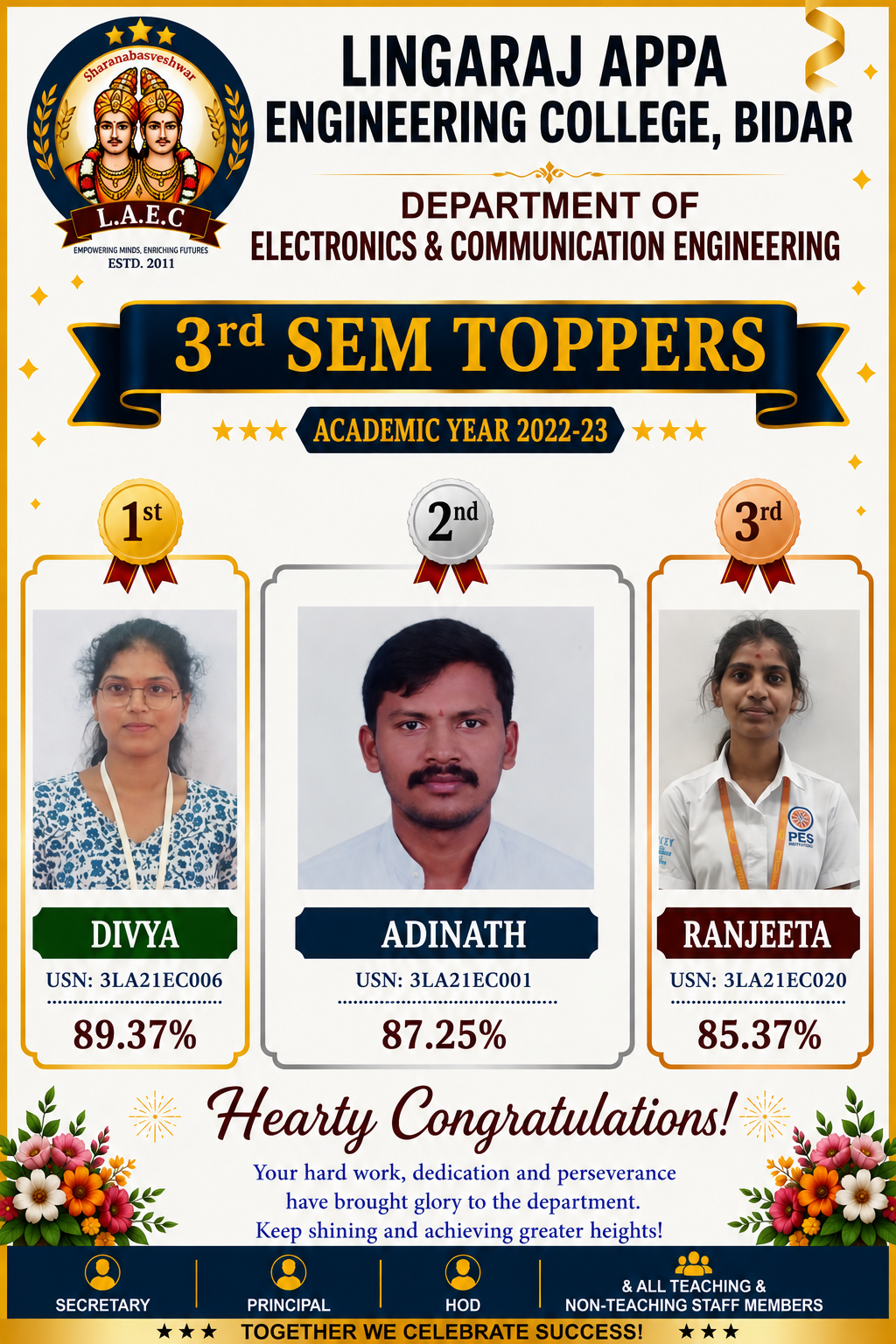
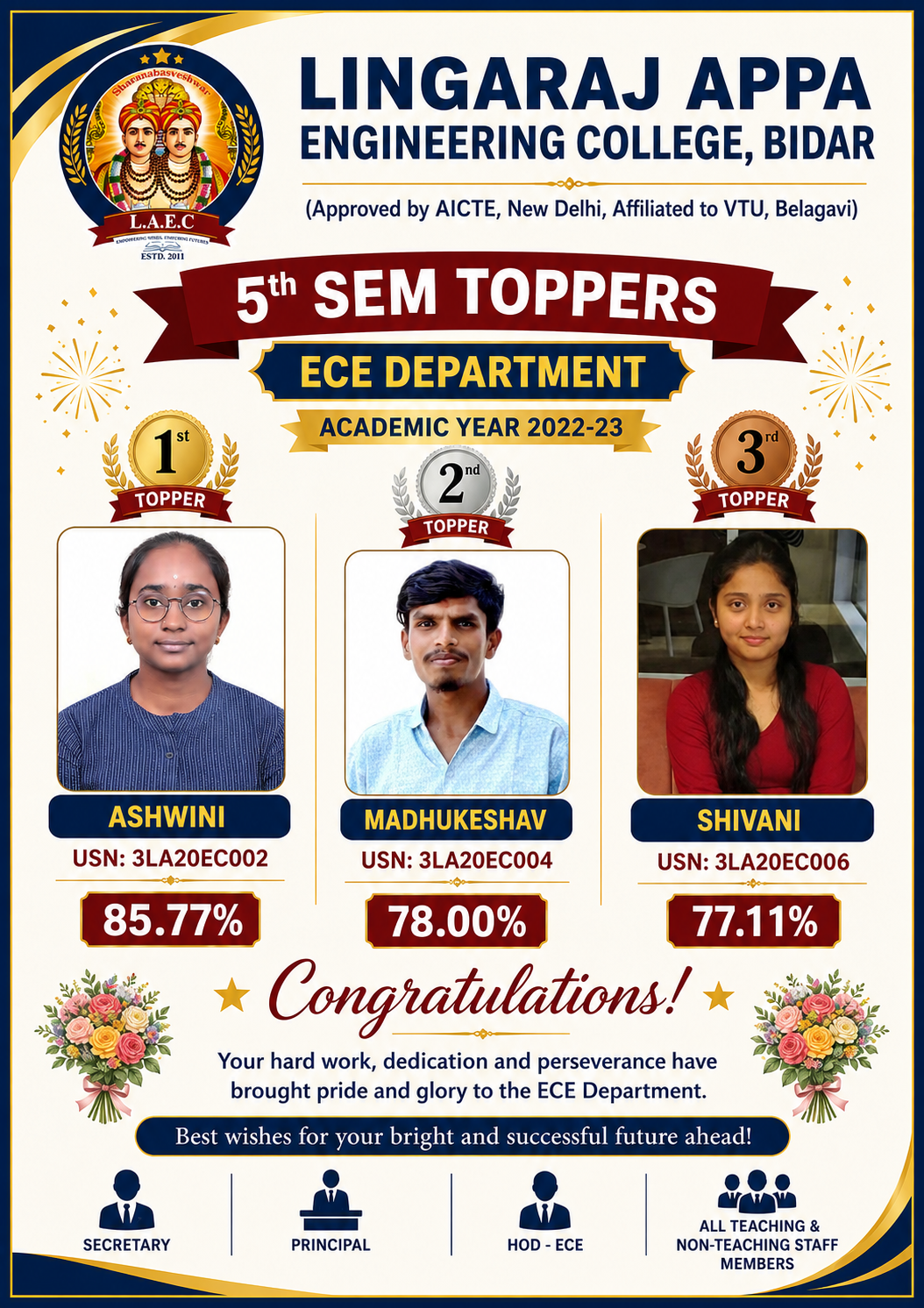
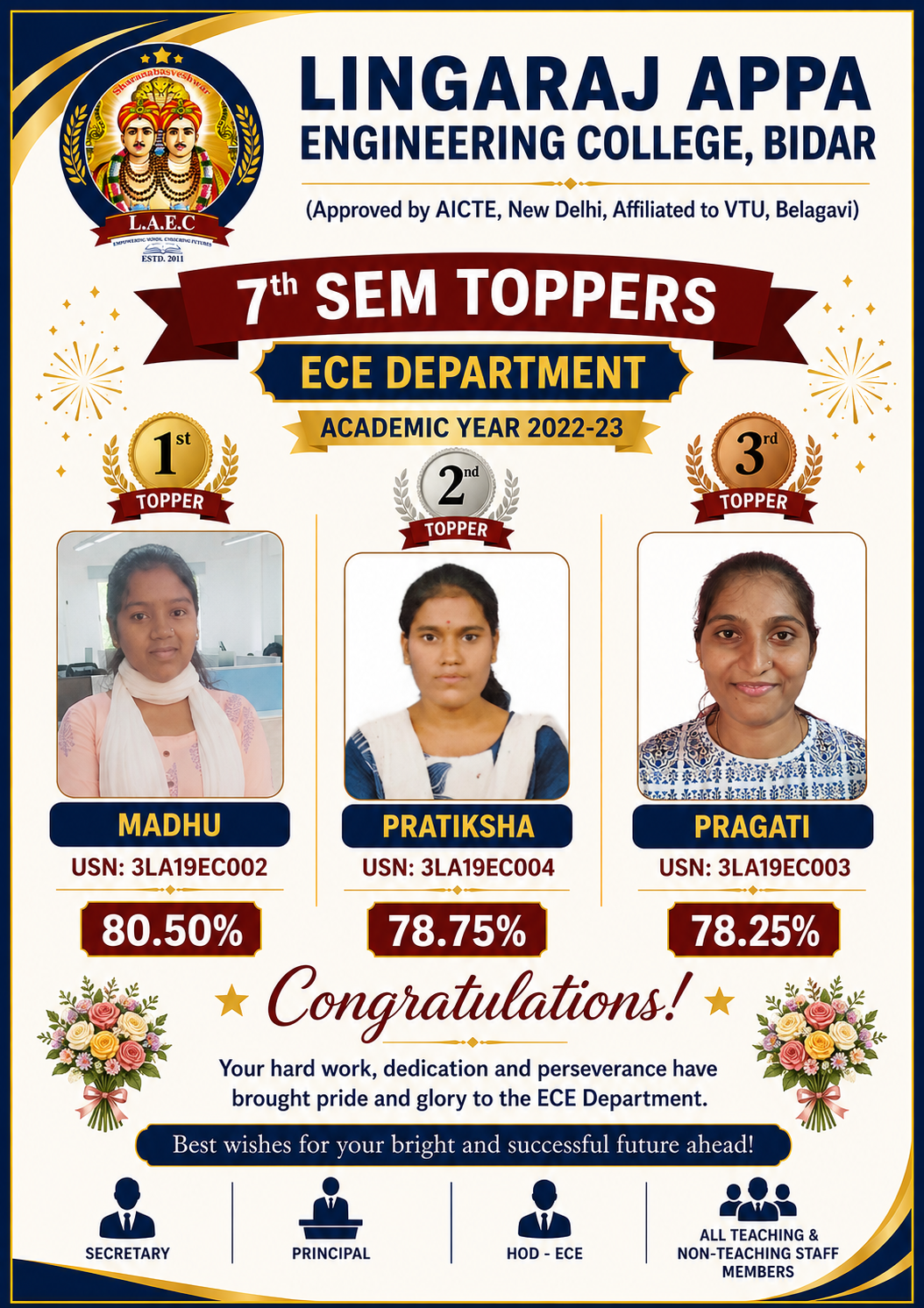
Academic Year 2022-23
Odd Semester Toppers
 |
 |
 |
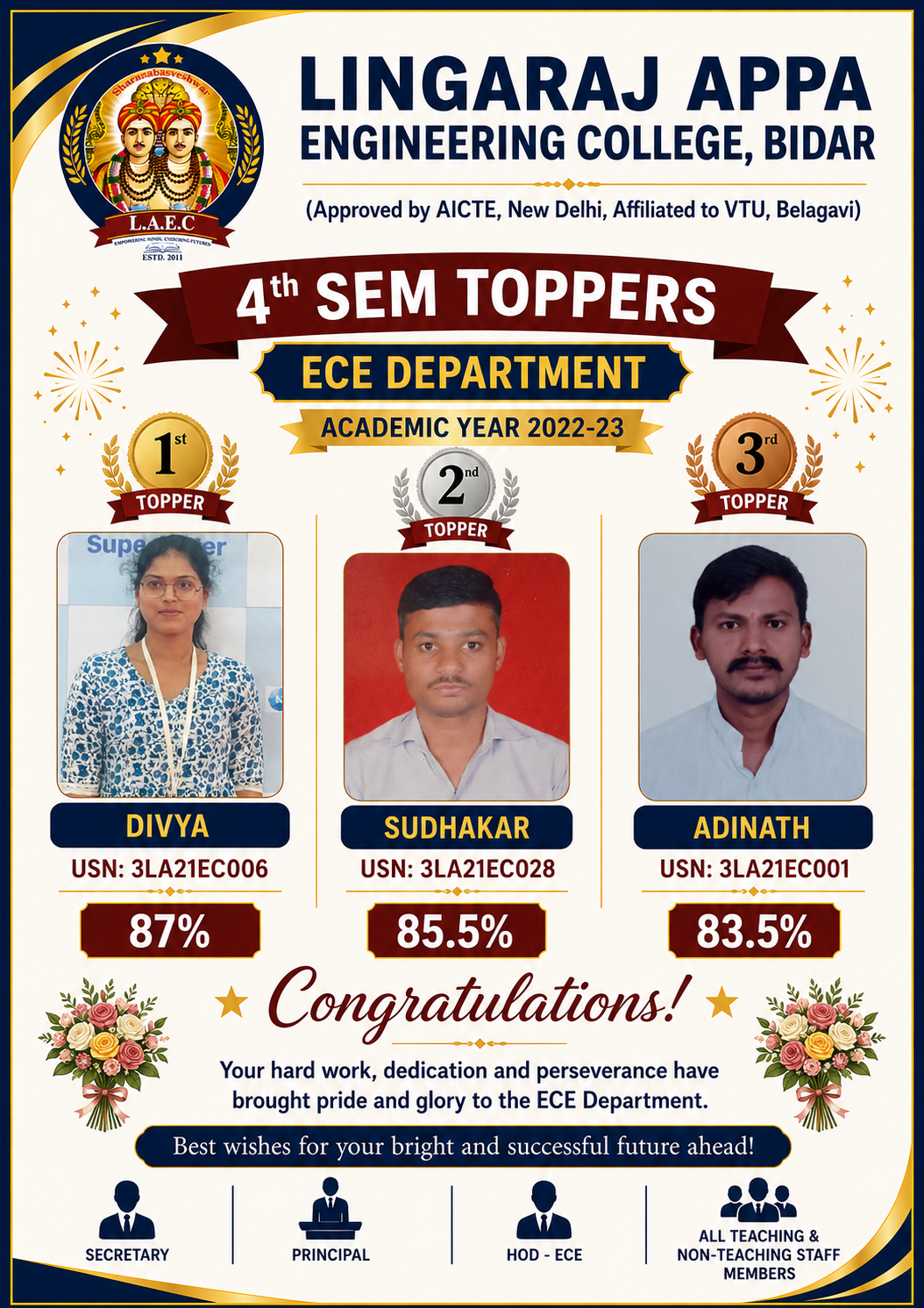
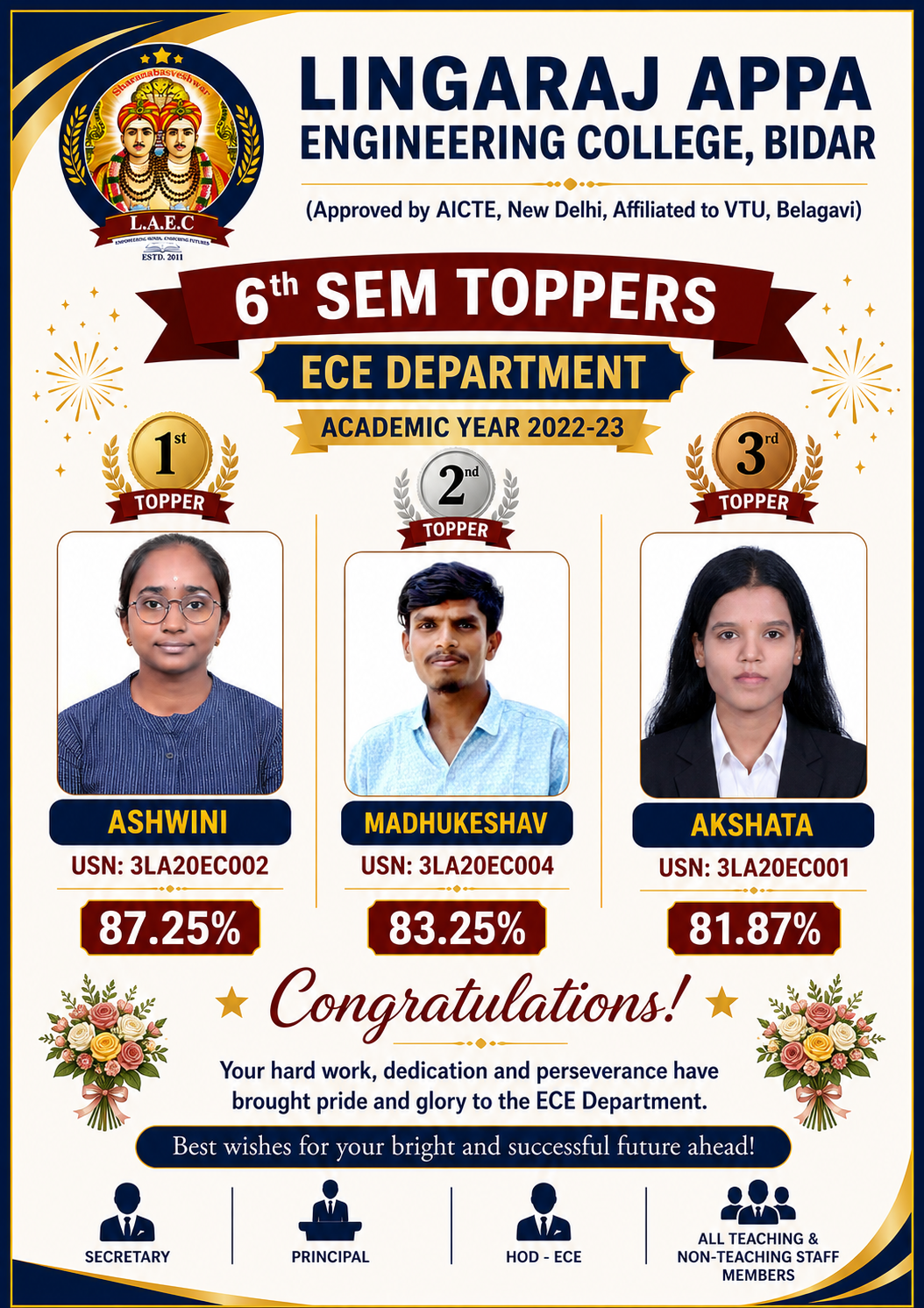
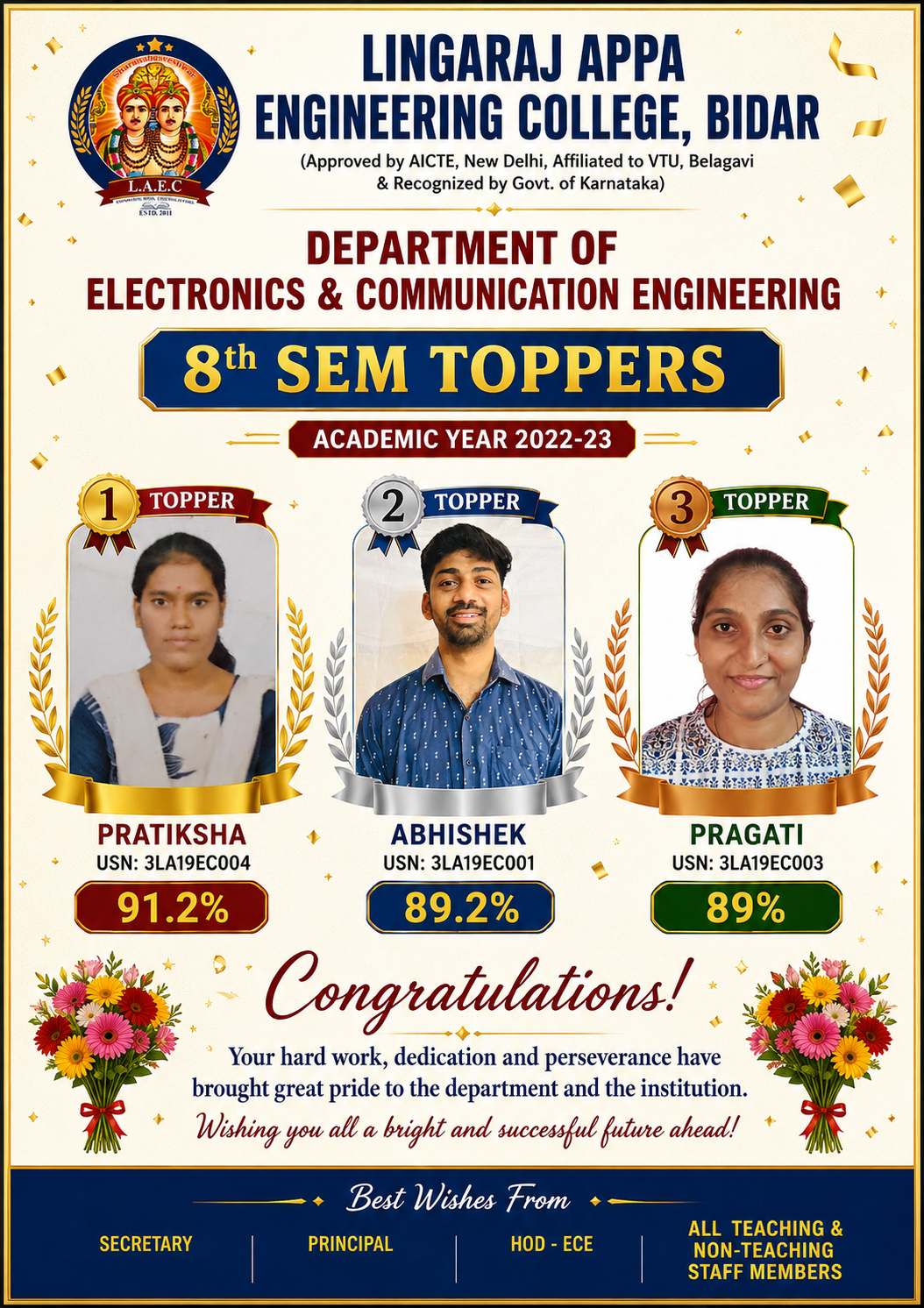
Even Semester Toppers
 |
 |
 |
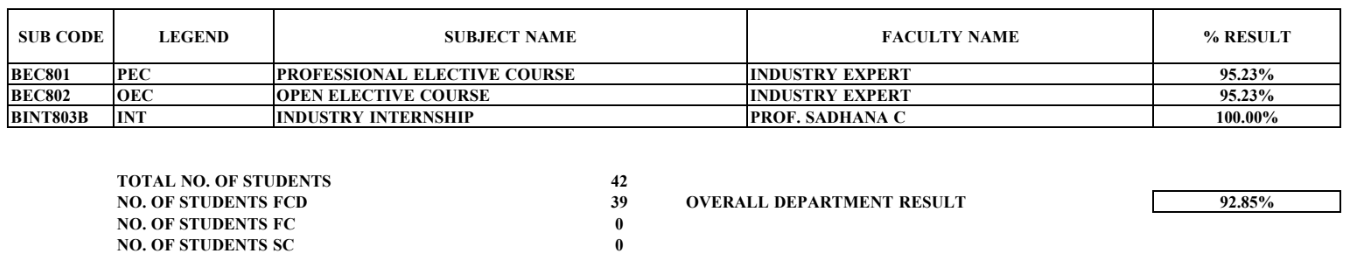
Academic Year: 2025-26
8th Sem Result Analysis
7th Sem Result Analysis
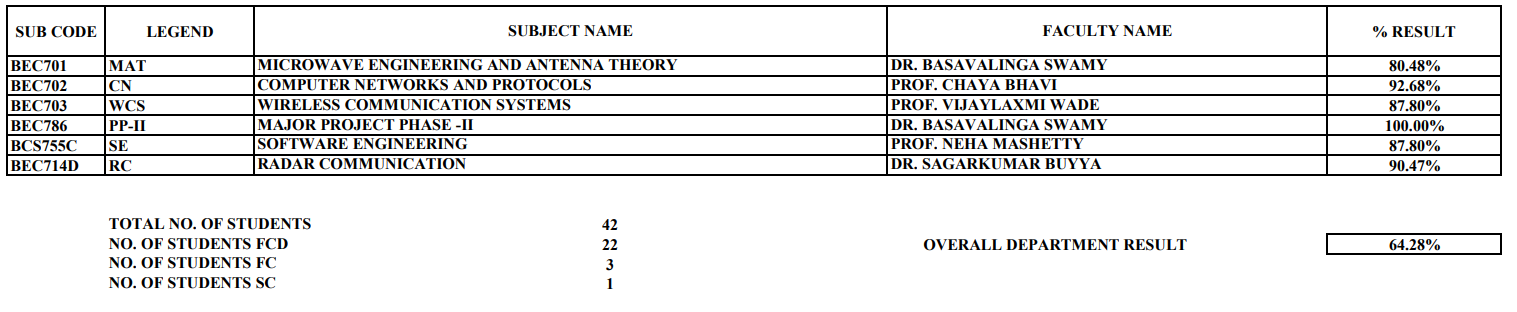
6th Sem Result Analysis
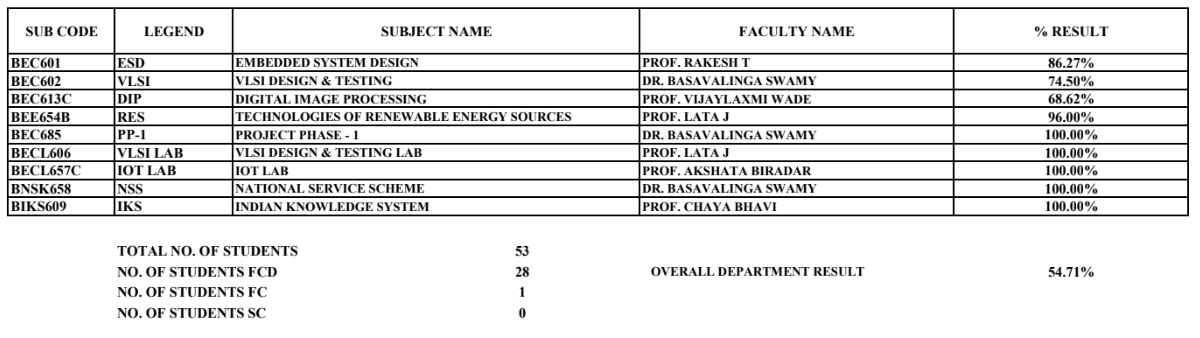
5th Sem Result Analysis
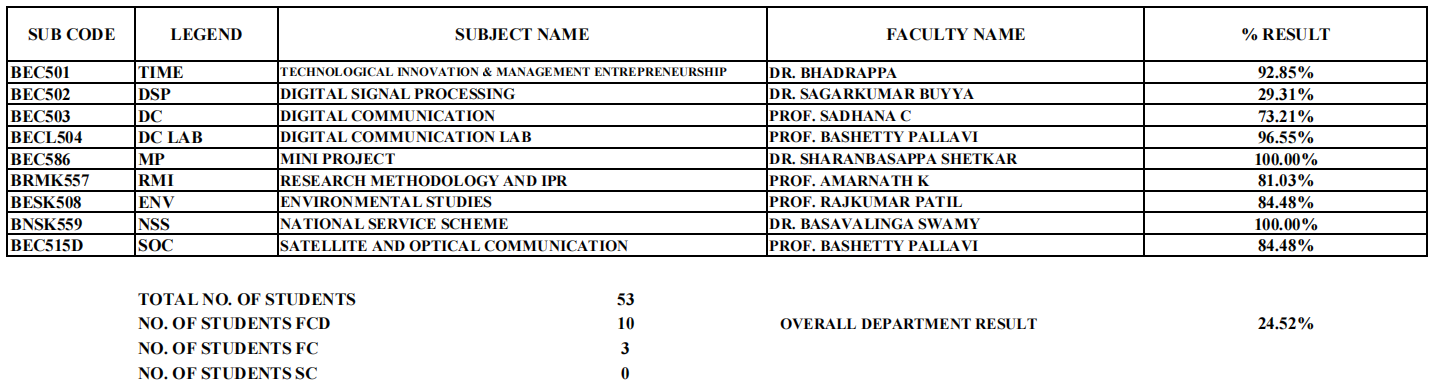
4th Sem Result Analysis

3rd Sem Result Analysis
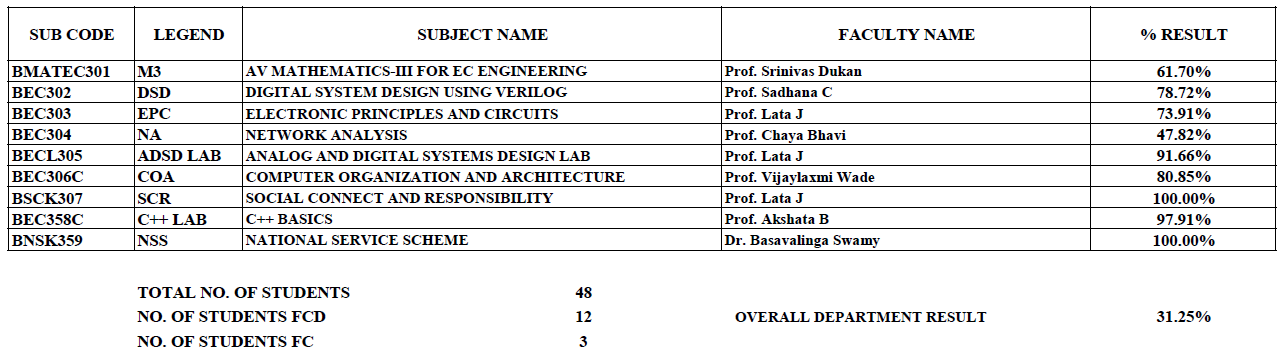
Academic Year: 2024-25
8th Sem Result Analysis

7th Sem Result Analysis
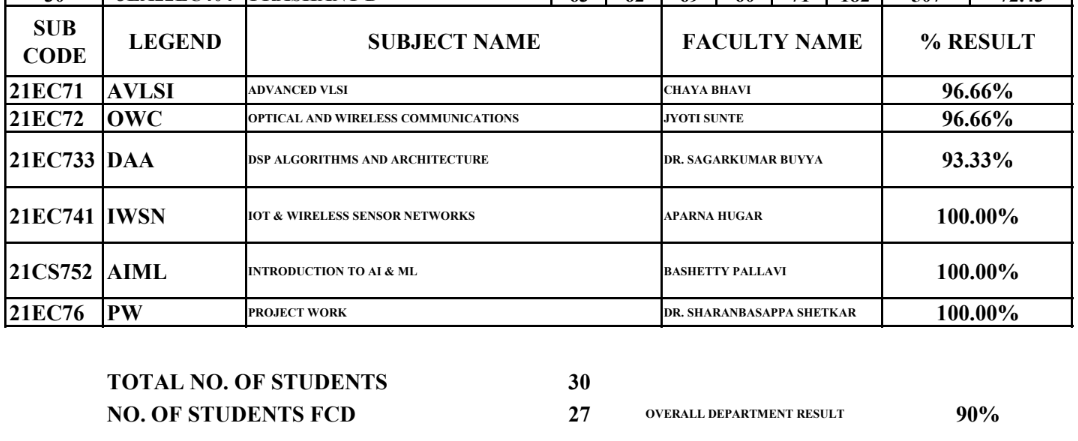
6th Sem Result Analysis

5th Sem Result Analysis
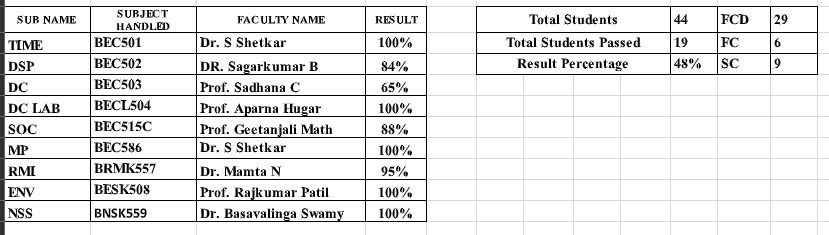
4th Sem Result Analysis
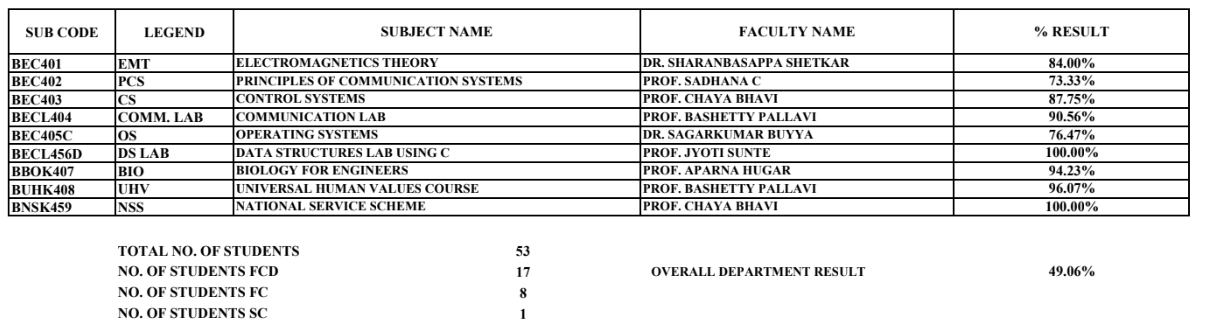
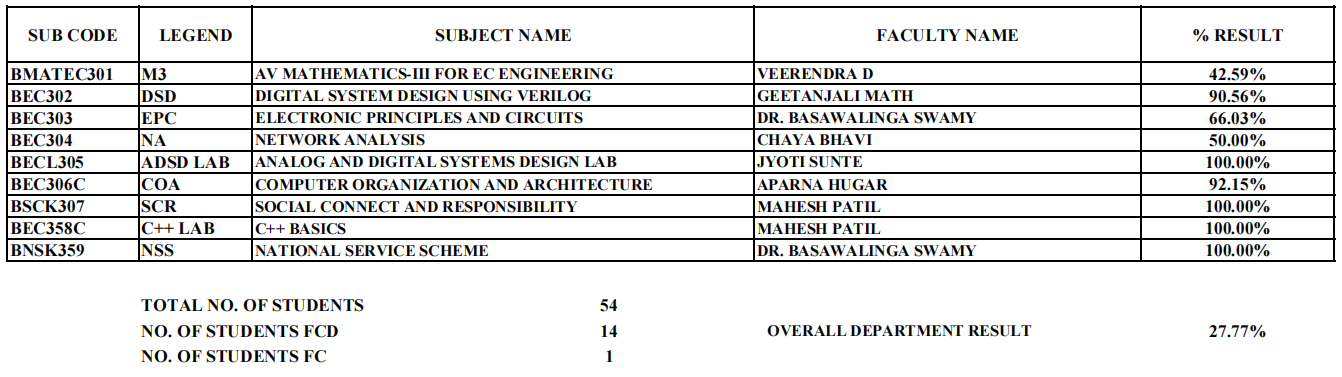
3rd Sem Result Analysis
Prominent Alumni
 |
 |
 |
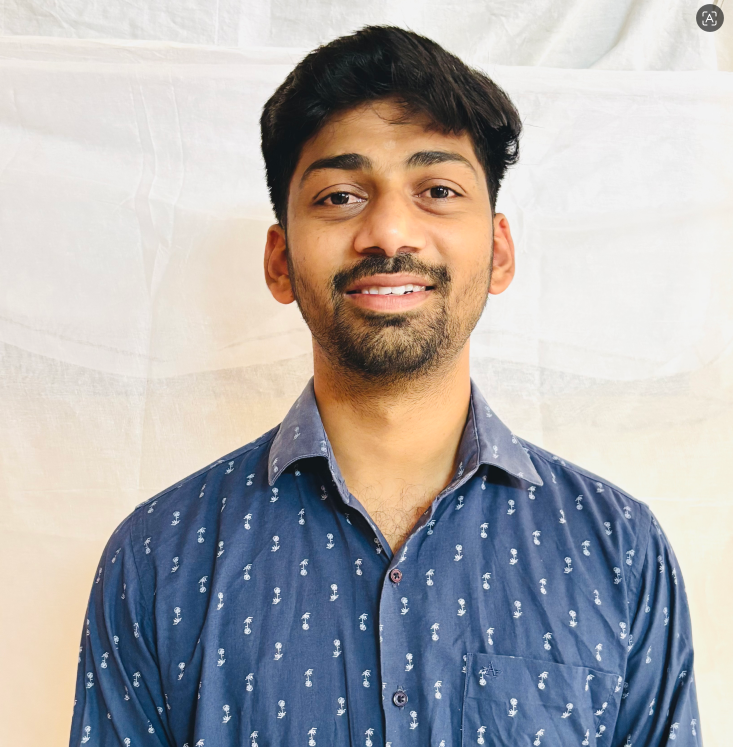
Abhishek H, Analyst, Deloitte Consulting India Private Limited, Hyderabad. |
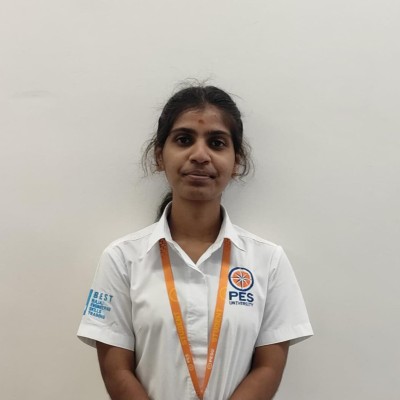
Ranjeeta S, Graduate Engineer Trainee, DIFACTO Robotics and Automation Pvt. Ltd., Bengaluru. |
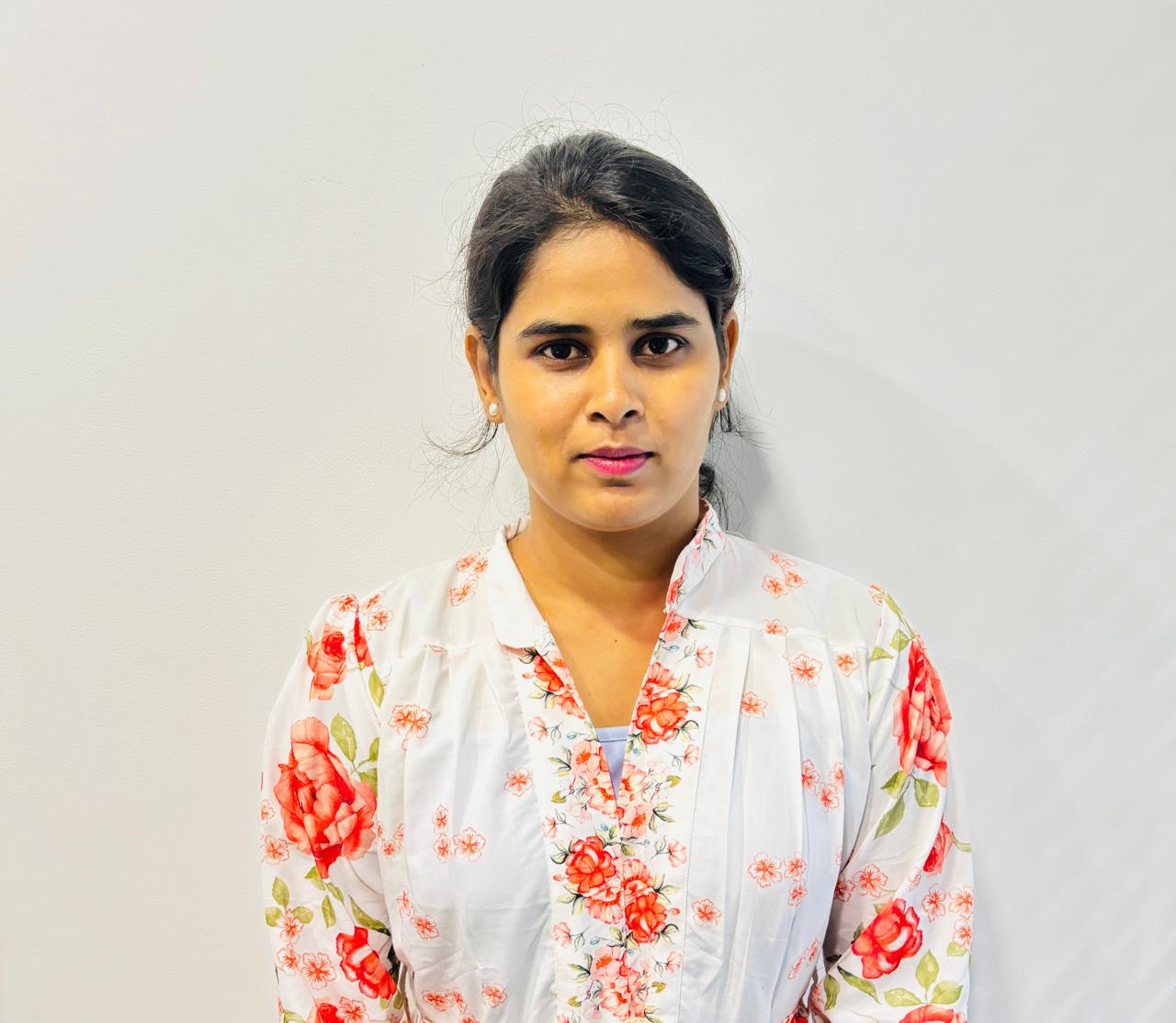
Poojashree R, Software Engineer, Accenture Solutions Pvt. Ltd., Hyderabad. |
|
|
|
|
Patil Mayuri, QA Analyst, Capgemini Technology Services India Ltd.,Bengaluru. |
Madhukeshav, ASE-Trainee, TCS, Bengaluru |
Akshata, AI Engineer, SynthLinx, Bengaluru |
|
|
|
|
Shivani, Software Engineer, Enkonix Software Services Pvt. Ltd., Bengaluru |
Vijaylaxmi Swamy, ASE-Trainee, TCS, Mumbai |
Nagaraj, GET, Festo India Pvt., Ltd., Bengaluru |
|
|
|
|
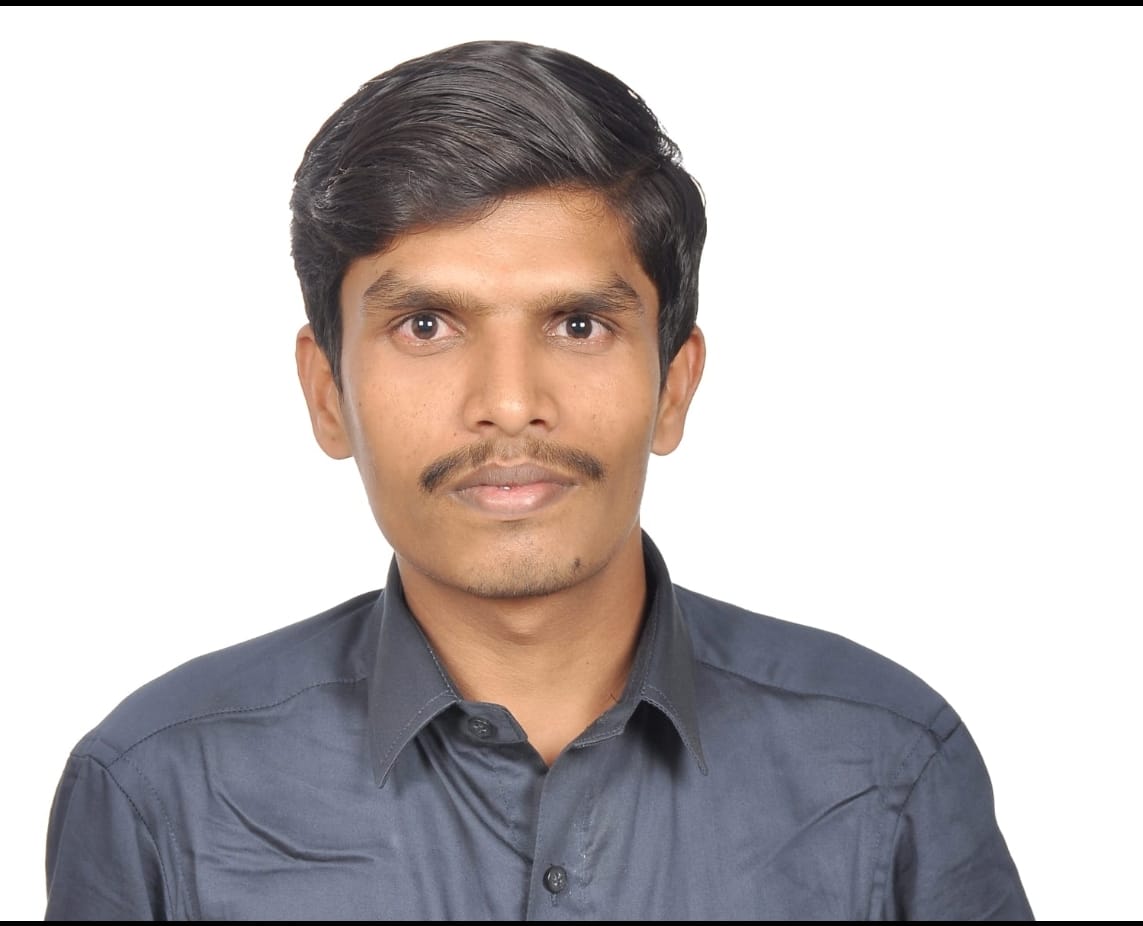
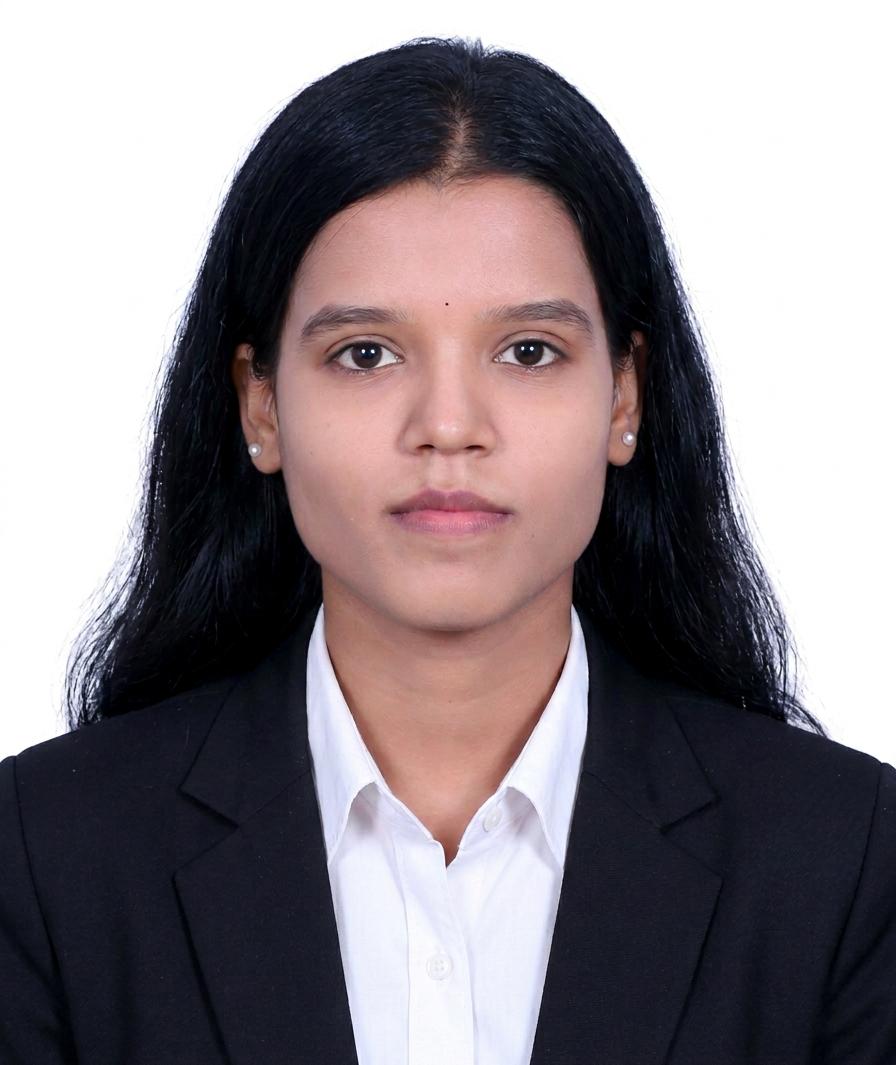
Ravikiran, Dexler Energy Pvt. Ltd., Kalaburagi |
Suriya Begum, PE-Maps, Cognizant Technology Solutions India Pvt. Ltd., Hyderabad |
Premkumar, Asst. Engineer, Hong Yi Interconnect Technology(India) Pvt. Ltd., Hyderabad |
|
|
|
|
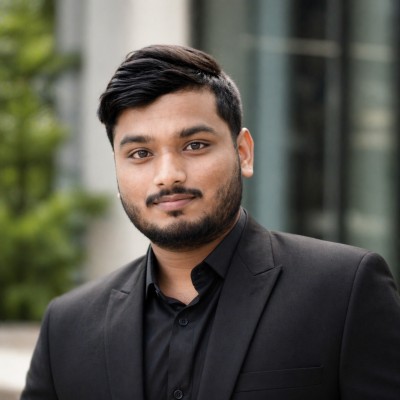
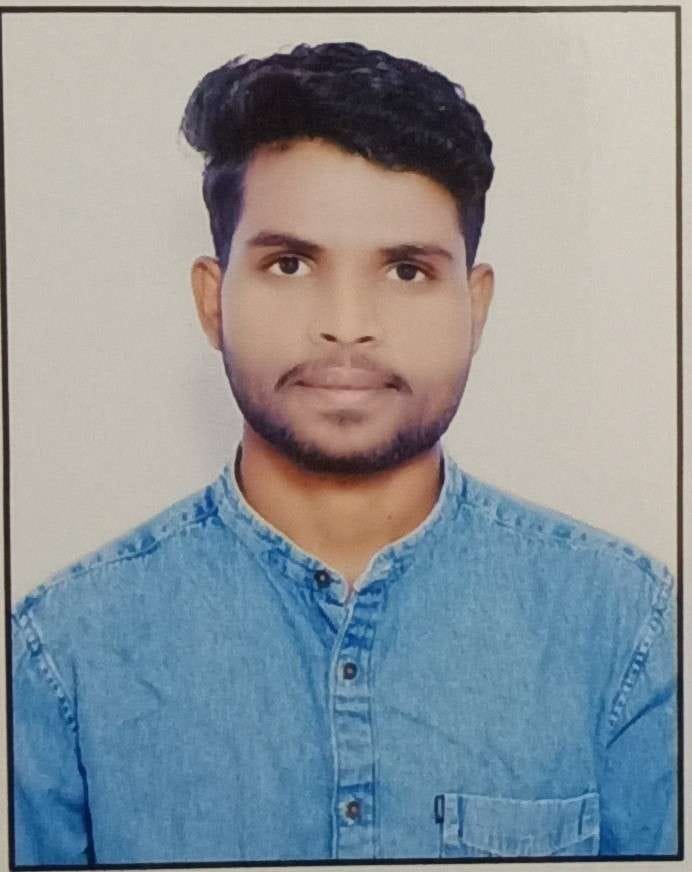
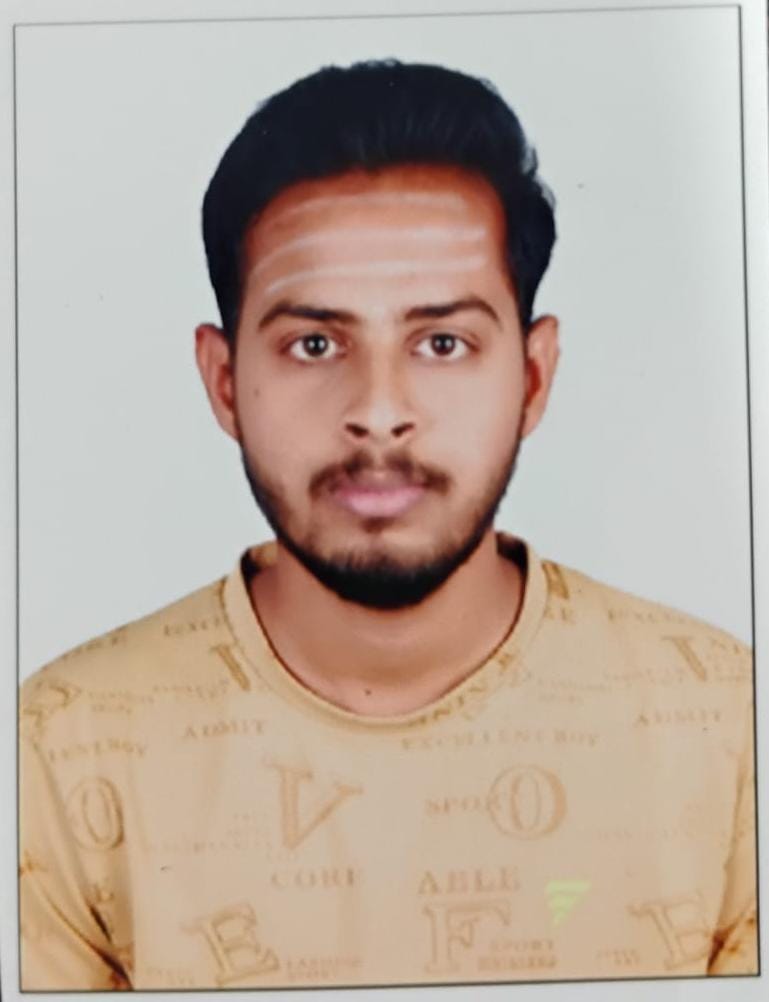
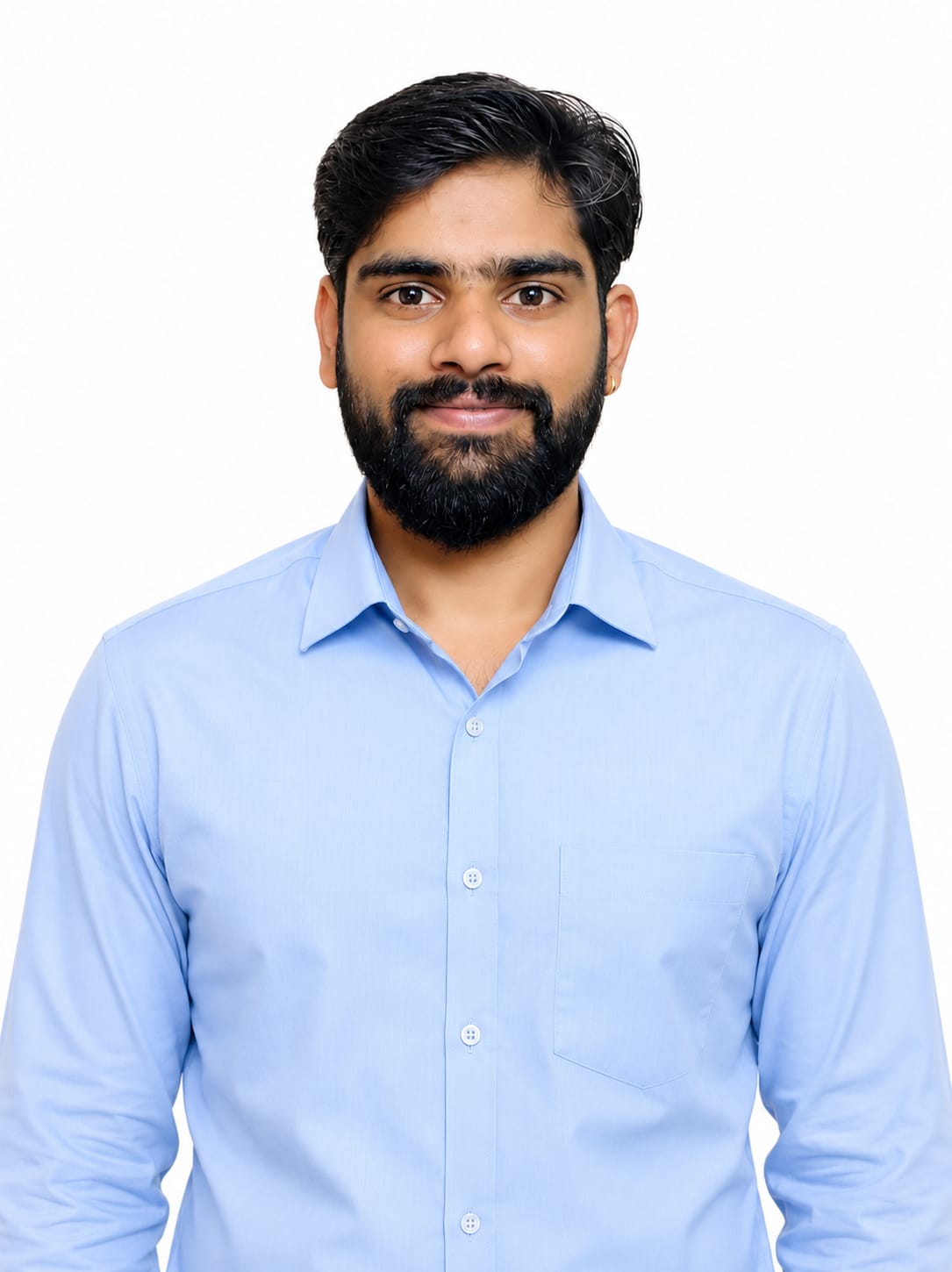
Rajkumar, LabVIEW Engineer, Constelli Signals Pvt. Ltd., Hyderabad |
Ganpati Avanti, Lead Engineer, Quest Global, Bengaluru |
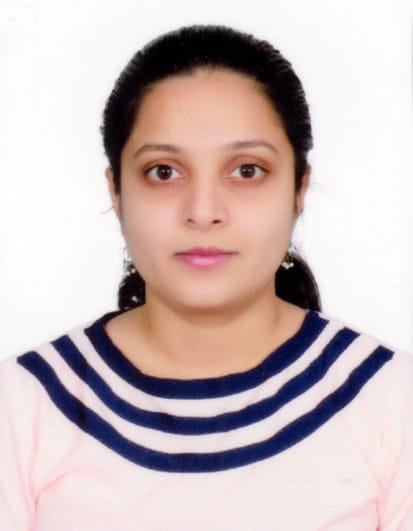
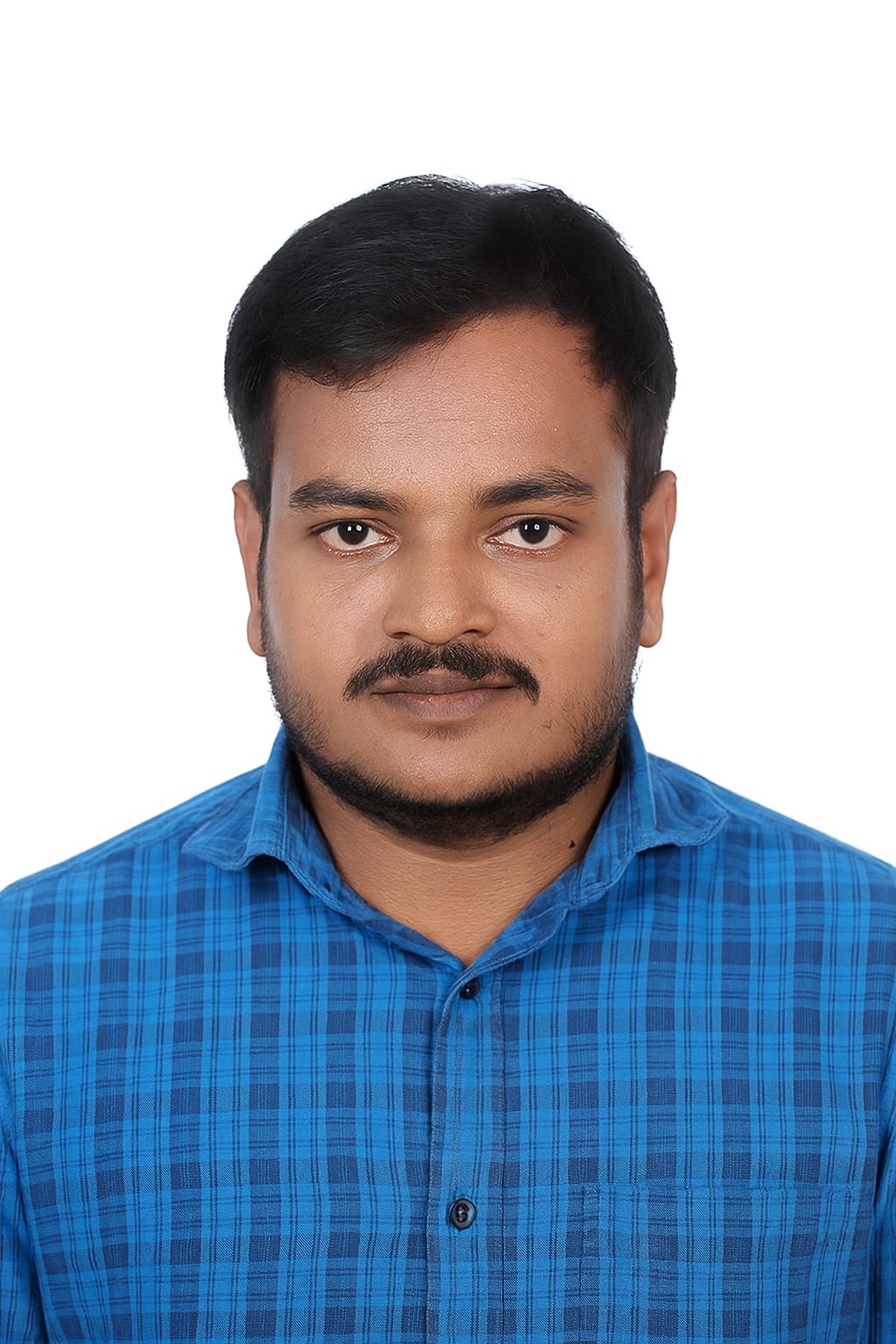
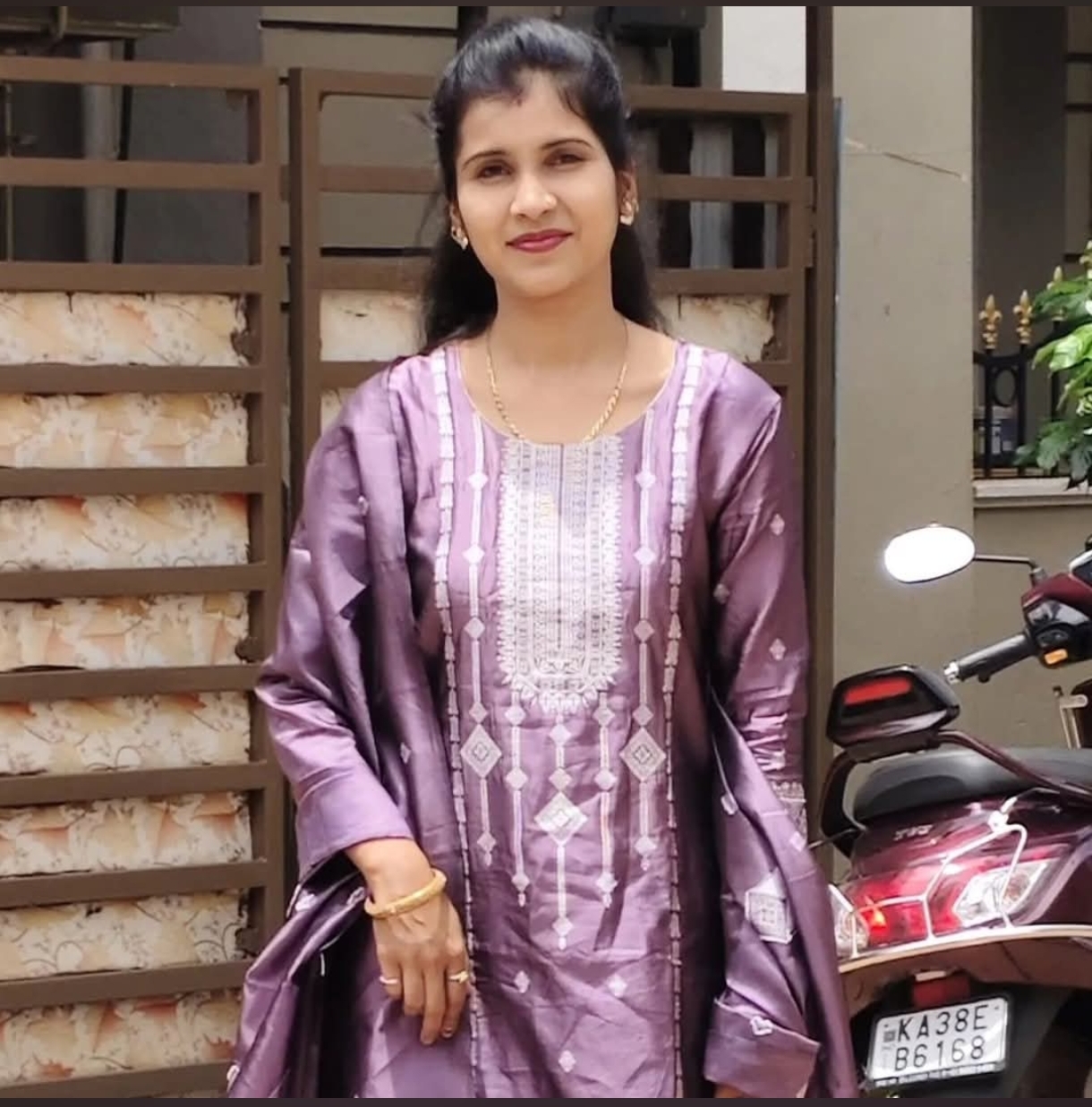
Pooja S H, Assistant Professor, Dept. of ECE, Govt. Engg. College, Bidar |

UG Students Information
| 2025-26_ECE Students List |
| 2024-25_ECE Students List |
| 2023-24_ECE Students List |
| 2022-23_ECE Students List |
| 2021-22_ECE Students List |
| 2020-21_ECE Students List |
| 2019-20_ECE Students List |
PG Students Information
| 2024-25 LVS Students List |
| 2023-24 LVS Students List |
| 2022-23 LVS Students List |