- Department Overview
- HOD Desk
- Department Vision
- Department Mission
- Program Educational Objectives (PEO'S)
- Program Specific Outcomes (PSO'S)
- Faculty List
- Lab Details
- Events
- Innovative Teaching Methods
- Professional Body Details
- Best Projects
- Placement and Higher Studies
- EEE Topper's
- Result Analysis
- Prominent Alumni
- Student Information
| Department Overview |
The Department of Electrical & Electronics Engineering was established in the Institution during 2011. It is one of the Prestigious and Core department in the Institution, offering a UG program with an intake of 60 students. Dr. Sangappa Rajeshwar is Head of the Department.
The department has well-equipped laboratories with state-of-art infrastructure, a department library, and internet facilities. The Department endows with additional industrial training, live projects & hands-on to enhance employability.
| HOD Desk |
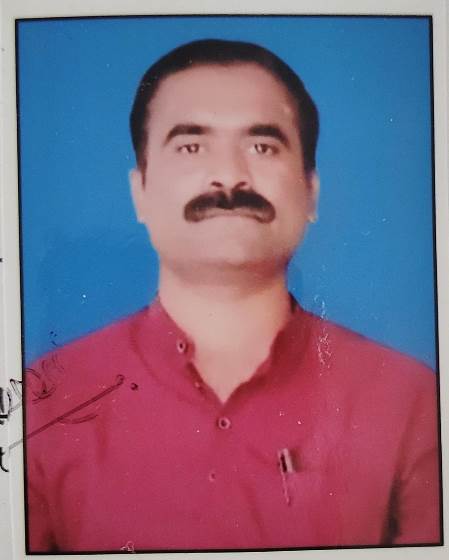
| Assoc. Professor and H.O.D |
| Department of Electronics and Electrical Engineering |
Dr. Sangappa Rajeshwar Assoc. Professor and H.O.D, a highly respected member of our faculty. Professor Dr. Sangappa Rajeshwar holds a Ph. D from Chhatrapati Shahu Ji Maharaj University, Kanpur and has extensive experience in teaching and research.
Department Vision
To be recognized as a centre of excellence to produce competent and ethical electrical engineers Capable of finding solution problems related to Society, environment and industry using trending and Innovative technologies.
Department Mission
M1: To produce competent and disciplined electrical engineers through delivery of quality education to meet the on-going global challenges.
M2: To provide educations and research in Sustainable electrical engineering.
M3: To develop Strong Collaborative links with premier industries, institutions and the government agencies.
M4: To be accountable through Self-evaluation and Continuous improvement
| Faculty List | |||
| Name | Designation | Qualification | Experience |
| Dr. Sangappa | Associate Professor & H.O.D | B.E., M.Tech., Ph.D., | 13 |
| Prof. Archana | Assistant Professor | B.E., M.Tech.,(Ph.D.,) | 8.2 |
| Prof. Basavaraj R B | Assistant Professor | B.E., M.Tech., (Ph.D.,) | 8 |
| Prof. Jaganath | Assistant Professor | B.E., M.Tech., | 4 |
| Prof. Prashant | Assistant Professor | B.E., M.Tech, | 12 |
| Prof. Raaziya Banu | Assistant Professor | B.E., M.Tech.,(Ph.D.,) | 2 |
| Prof. Chandrika | Assistant Professor | B.E., M.Tech., | 4.2 |
| Prof. Santoshi | Assistant Professor | B.E., M.Tech.,(Ph.D.,) | 1 |

| Lab Details |
Lab Name: RELAY & HV LAB
Lab Name: CONTROL SYSTEM LAB
| S.NO | Item Description | Location of dept | Number Quantity |
| 01 | Comparator Study Module, CLS040 | Control system lab | 1 no |
| 02 | P-I.D Controller Study module | Control system lab | 1 no |
| 03 | Ac Servo Motor 180v, 1500 RPM, 120 watts SL. No: 11139506 13001+13 | Control system lab | 1 no |
| 04 | DC servo motor 0-180v,1500 rpm,120 watts SL.No: 11139506 | Control system lab | 1 no |
| 05 | Second order system study model CSL 30 | Control system lab | 1 no |
| 06 | Synchro pair study module | Control system lab | 1 no |
Lab Name: POWER ELECTRONICS LAB
| SL.NO | Item Description | Location department | Number Quantity |
| 01 | Static characteristics of SCR Serial no PEL1A,E1B2 | Power electronics lab | 02 |
| 02 | Static characteristics of MOSFET & IGBT Serial no PEL2A,2B | Power electronics lab | 02 |
| 03 | SCR turn-on circuit using synchronised UJT relaxation oscillator Serial no PEL3A,3B | Power electronics lab | 02 |
| 04 | SCR digital triggering circuit for a single phase controlled rectifier and AC voltage controller Serial no PEL4A,4B | Power electronics lab | 02 |
| 05 | Single-phase controller FWR with R & R-L loads Serial no PEL5A,5B1 | Power electronics lab | 02 |
| 06 | Ac voltage connected to R&R-L load Serial no PEL6A,6B | Power electronics lab | 02 |
| 07 | Speed control of a separately excited DC motor using IGBT or MOSFET chopper Serial no PEL7A,7B | Power electronics lab | 02 |
| 08 | Speed control of stepper motor Serial no PEL8A,8B | Power electronics lab | 02 |
| 09 | Speed control of universal motor using AC voltage controller Serial no PEL9A,9B | Power electronics lab | 02 |
| 10 | Single phase full bridge inverter based on MOSFET or IGBT connected to R-load Serial no PEL10A,10B | Power electronics lab | 02 |
| 11 | Speed control of DC motor using single semi converter Serial no PEL11A,11B | Power electronics lab | 02 |
| 12 | Study of commutation circuit and auxiliary circuit Serial no PEL12A,12B | Power electronics lab | 02 |
Lab Name: ELECTRICAL MACHINE LAB (TANSFORMER & GENERATOR)
| SL.No | Item Description | Location department | Number Quantity |
| 01 | · Sc,oc test on single phase transformer & predetermination of efficiency and regulations single phase transformer experimental setup · single phase variac 0-250v ,15 A. | Transformer & induction machine lab | 01 |
| 02 | · Sumpner's test , single phase transformer experimental Setup · Single phase variac | Transformer & induction machine lab | 01 |
| 03 | · Single phase set up · Single phase variac · Variable lamp load 230v, 0-3600w | Transformer & induction machine lab | 01 |
| 04 | · Polarity test and connect of 3 single phase transformer in star-delta & determination of efficiency for balanced direct loading · Three phase transformer set up · Three phase variac | Transformer & induction machine lab | 01 |
| 05 | · Scott connection for balanced and unbalanced two phase upf loads · Three phase transformer experimental setup · Three phase variac | Transformer & induction machine lab | 01 |
| 06 | · Load test on 3- phase induction motor 3 phase 5hp, 440v, 50hz 1400 rpm, 3phase variac | Transformer & induction machine lab | 01 |
| 07 | · Speed control of 3 phase induction motor, 3 phase wound rotor type 3hp , 415 v, 1440 rpm , 3 phase variac | Transformer & induction machine lab | 01 |
| 08 | · Load test on induction generators, 3phase IM, DC shunt generator test rig | Transformer & induction machine lab | 01 |
| 09 | · Load test on 1phase IM single phase IM test rig · Single phase IM 2hp ,230v, 1500 rpm, single phase variac · Patch cords with fork type crimped 15 A | Transformer & induction machine lab | 01 130 |
Lab Name: DC & SYNCHRONOUS MOTORS
| SL.NO | Item Description | Location department | Number Quantity |
| 01 | DC shunt motor 5.2kw,220v,1500 rpm coupled to DC shunt generator 5.2KW,220v,1500rpm with control panel | DC&SM lab | 1 |
| 02 | DC shunt motor test rig with mechanical load DC shunt motor 3.7kw,220v,1500 rpm with control panel DPM DC voltmeter -300v, DC ammeter-2A,rheostat 0-300E (provide on the control panel) | DC&SM lab | 1 no |
| 03 | Two identical DC shunt machines test rig DC shunt machine 3 kw,220v, 1500 rpm with control panel | DC&SM lab | 1 |
| 04 | Two identical DC series machine test rig DC series machine 3.7 kw ,220v,1500rpm with control panel | DC&SM lab | 1 |
| 05 | 3-phase induction motor DC shunt generator test rig 3-phase induction motor 33hp,440v, 50 hz,1500 rpm DC shunt machine 3 kw, 220v ,1500 rpm with control panel | DC&SM lab | 1 |
| 06 | DC shunt motor 3ph alternator test rig DC shunt motor 5.2kw,220v,1500rpm coupled to 3 ph alternator 6 KVA, 415v,50hz,1500rpm with control panel | DC&SM lab | 1 |
| 07 | DC shunt motor 3- ph alternator test rig with synchronising panel DC shunt motor 5.2kw, 220v, 1500 rpm with control panel | DC&SM lab | 1 no |
| 08 | Synchronous motor with mechanical load test rig 3ph, 3hp,415v, 1500 rpm synchronous motor with control panel | DC&SM lab | 1 |
| 09 | DC shunt motor 3 phase alternator test rig Alternator 5.2kw, 220v,1500rpm. 3-ph alternator 5KVA,415v,50hz, 1500rpm with control panel | DC&SM lab | 1 |
Innovative Teaching Methods.
- Lectures: Classroom lectures effectively deliver theoretical knowledge through logical explanations and numerical problem-solving. Faculty members use interactive teaching techniques to encourage student participation and improve learning outcomes.
- Tutorials: Tutorial sessions provide students with an opportunity to dive deeper into numerical and logical problem-solving courses.
- Presentations Using Audio-Visual Aids: Presentations are used to illustrate complex engineering concepts visually using graphics, animations, and real-world data. Videos showcasing practical engineering applications help students to better understand the impact of technology. These sessions are followed by interactive discussions, where students can ask questions and exchange ideas.
- Laboratory-Based Learning: Students apply theoretical concepts in practical lab sessions, reinforcing their understanding through hands-on experience. Open ended experiments beyond syllabus allowing students to explore concepts creatively, develop critical thinking and engage in real-world problem-solving.
- Collaborative Learning: A group-based educational approach where students work together to solve problems, complete projects, and share ideas. Enhances teamwork, communication skills, and problem-solving abilities.
- Think and Speak: Students are assigned specific topics and asked to think critically and present their ideas in front of their peers. This method helps improve confidence, articulation, and public speaking skills.
- Flipped classroom: A flipped classroom is a teaching approach where students acquire foundational knowledge before class, often through videos or readings, and then use class time for active learning, such as problem-solving, group work, and discussions.
- YouTube videos: NPTEL videos are part of the National Programms on Technology Enhanced Learning, offering a vast repository of free, high-quality educational content.
- Poster presentation: Poster presentation is a visual display of projects and ideas which are presented in a public setting such as seminar and exhibition. It helps students to connect with others, improve the presentation skills and confidence, it provides a platform to share ideas with wider audience.
- Project Based Learning: It is an integral part of the curriculum, ensuring hands-on learning and practical exposure for students. Students actively engage in projects that help them apply theoretical knowledge to real-world challenges, fostering innovation, problem-solving skills, and technical expertise. Project based Learning ensure that, students are well-equipped with the technical competencies, creativity, and problem-solving skills required for a successful engineering career.
- Quiz: Teachers conduct quiz sessions to help students understand concepts as well as to have a first-hand assessment on students learning.
- Seminars: Students are engaged in Seminars and debates related to current syllabus topics and cutting-edge industrial technologies.
- Workshops: These are interactive, hands-on sessions where participants collaborate to solve problems, develop skills, or achieve specific goals under the guidance of a facilitator.
| Year-wise Summary of Placement and Higher Studies (Percentage Calculated Based on Student Intake) | |||||||
| Pass Out Year | Department | In Take | Total Students | PLACED STUDENTS | Higher Studies | Entrepreneurship | Percentage |
| 2022-23 | EEE | 54 | 9 | 4 | 0 | 0 | 7.41 |
| 2023-24 | EEE | 54 | 4 | 3 | 0 | 0 | 5.56 |
| 2024-25 | EEE | 54 | 20 | 6 | 0 | 0 | 11.11 |
| 2025-26 | EEE | 54 | 36 | 0 | 0 | 0 | 0.00 |